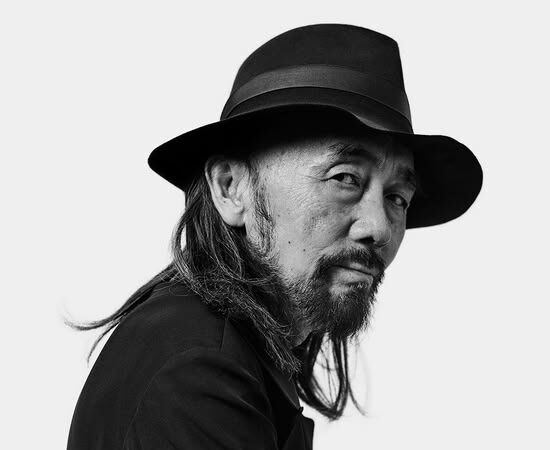
Yohji Yamamoto
In the beginning was not the light, but the shadow and Yohji Yamamoto made of it a sanctuary. Draped in black, he became the high priest of silence, consecrating fashion as a liturgy of freedom.

In the beginning was the shadow.
In post-war Japan, Yohji Yamamoto was born as a child of silence and black, in 1943, in Tokyo. His father, fallen during the war, left behind a void that shaped his destiny. It was his mother, a seamstress with tireless hands, who raised him in the modest family workshop. At her side, young Yohji discovered the secret language of fabrics and the spiritual weight carried by a simple stitch.
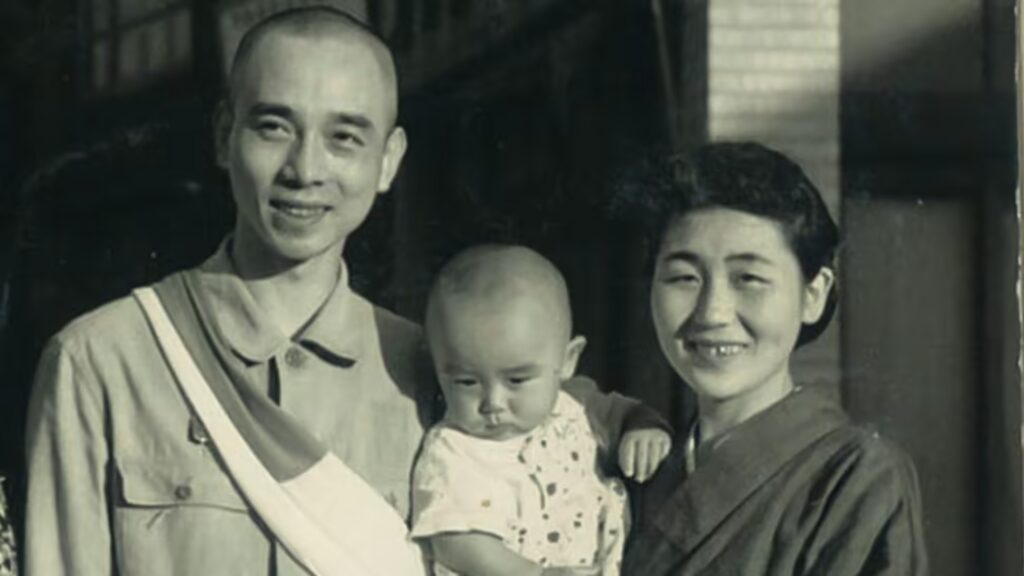
Yohji Yamamoto with his mom and dad – 1944
He first obeyed the earthly world by studying law, but the thread of destiny quietly pulled him toward another path. In 1969, he entered Tokyo’s Bunka College, a sacred temple of fashion, one of the very few men to cross its threshold at that time. He soon won prestigious awards, prophetic signs of the vocation awaiting him. One such prize granted him a pilgrimage to Paris, the ancient capital of couture. The young Yohji wandered its streets carrying his sketches as one carries an offering. But Paris, still blind to the star rising in the East, did not recognize him. No buyer came. He returned to Japan with a heavy heart, yet with an even fiercer spirit.
Back in Tokyo, the apostle of black began to forge his own creative sanctuary. With the support of his mother, he founded his first label in 1972, christened Y’s, a humble chapel devoted to the liberation of the body.

Yohji Yamamoto – Y’s 1972 label
In that discreet atelier, he honed his craft with monastic discipline. His early collections at Tokyo Fashion Week announced the coming of a new aesthetic era : quiet, radical, and unlike anything the archipelago had seen.
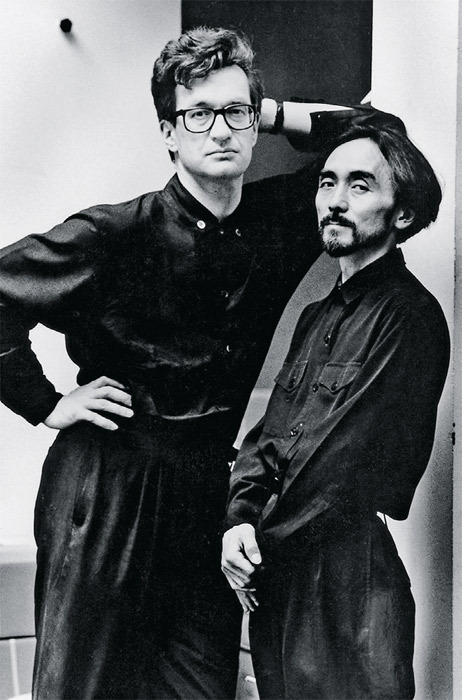
Wim Wenders and Yohji Yamamoto – 1989
Yet the true revelation awaited him in the West.
In 1981, Yohji Yamamoto returned to Paris to deliver a show that shook the pillars of the Western fashion temple. Beneath the ancestral sky of the Cour Carrée du Louvre, he unveiled vast silhouettes draped in darkness and mystery, like a procession of noble shadows crossing into the light. What many expected to be rejected provoked instead a seismic cultural tremor. “Our effort at simplification… was an almost adolescent provocation; I didn’t think it would have such an effect,” he would later confess. In a single evening, his name became legend. Critics, first incredulous, spoke of a black revolution. His oversized shapes, austere volumes and deep, enveloping fabrics stood as an open defiance against the glittering frivolity of the era. Yohji imposed black (an absolute black) which he called his “enveloping black,” a tone saturated with soul, history, and depth.
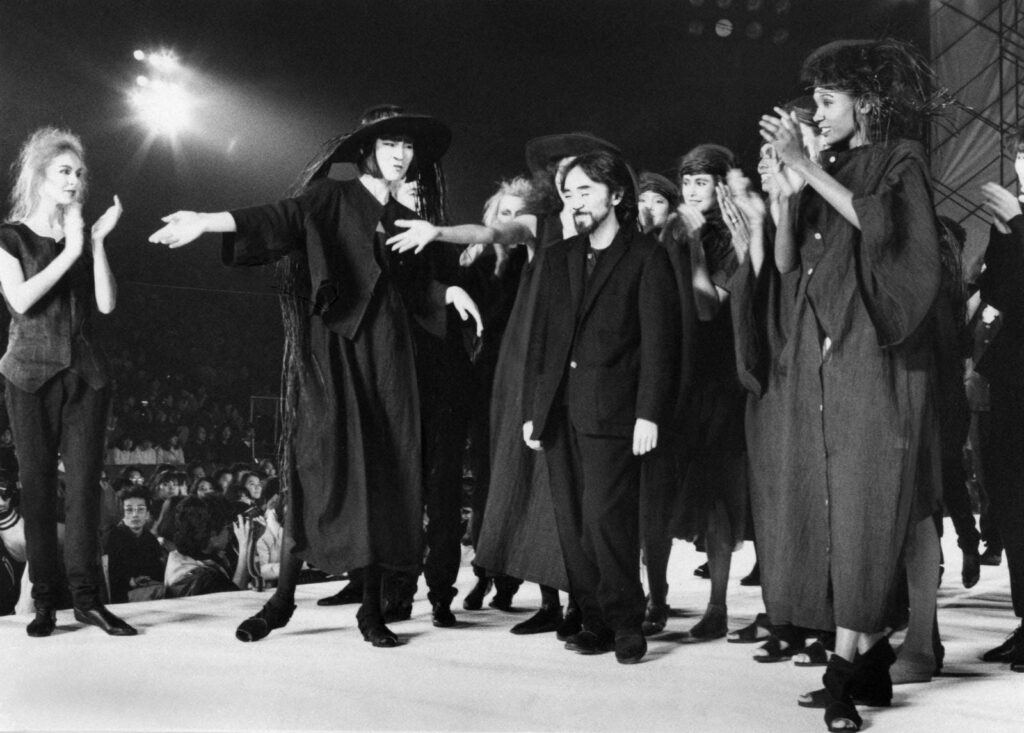
Yohji Yamamoto first runway in Paris – 1981
This black became both prayer and sacrament.
Season after season, Yamamoto returned to it the way a monk returns to his mantra. Yet this black was not the absence of colour : it was a message. “Black is modest and arrogant at the same time… Above all, black says: ‘I don’t bother you; don’t bother me.’” In his eyes, black was a refuge: it freed the body from intrusive gazes and released the spirit from fashion’s ephemeral tyranny. His philosophy thus unfolded : austere, contemplative, grounded in respect for the wearer. “My fashion, which I admit is inaccessible, aims to free women from traditional constraints,” was written of him. Liberation of the female silhouette, stripped of the straitjacket of seduction; liberation of the soul, freed from appearances, this was Yohji Yamamoto’s silent, almost messianic ambition.
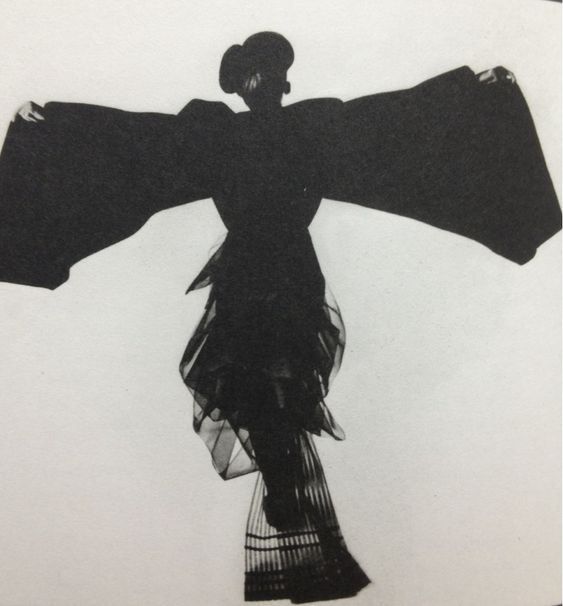
Yohji Yamamoto – Lookbook AW95 (Y’s/Yamamoto) – Photography by David Sims
Critics often dismissed his work as austere or unwearable, but Yohji remained unmoved in his faith. He insisted that his creations were not museum relics but garments for real lives: “My creations are bought and worn daily; they cannot be gallery art.” He drew equally from Eastern and Western traditions, marrying the solemnity of the kimono with the rigor of European tailoring. An admirer of Gabrielle Chanel, he dedicated an entire collection to her in 1998, proving that his avant-garde could converse respectfully with the spirits of past couturiers. And when the world of sport knocked on his door, he welcomed it: in 2001, he invited Adidas to place sneakers beneath his silhouettes. The alliance was so visionary that it gave birth to Y-3, heralding the rise of modern luxury sportswear. Yamamoto’s avant-garde did not reject everyday life. It transfigured it.

Adidas x Y-3 – 2020
But even prophets encounter trials.
In 2009, his house faltered under crushing debts and neared bankruptcy. Many thought the master would step back from the turbulent world of fashion. But like a stoic monk, he passed through this spiritual night without letting the flame extinguish. After a brief retreat, he returned in 2010 with a unisex collection that dissolved gender boundaries more completely than ever before : a rebirth acclaimed as a miracle by his faithful. The following year, the Victoria & Albert Museum in London consecrated a grand retrospective to his vision, acknowledging that he had changed fashion’s very perception of the body.
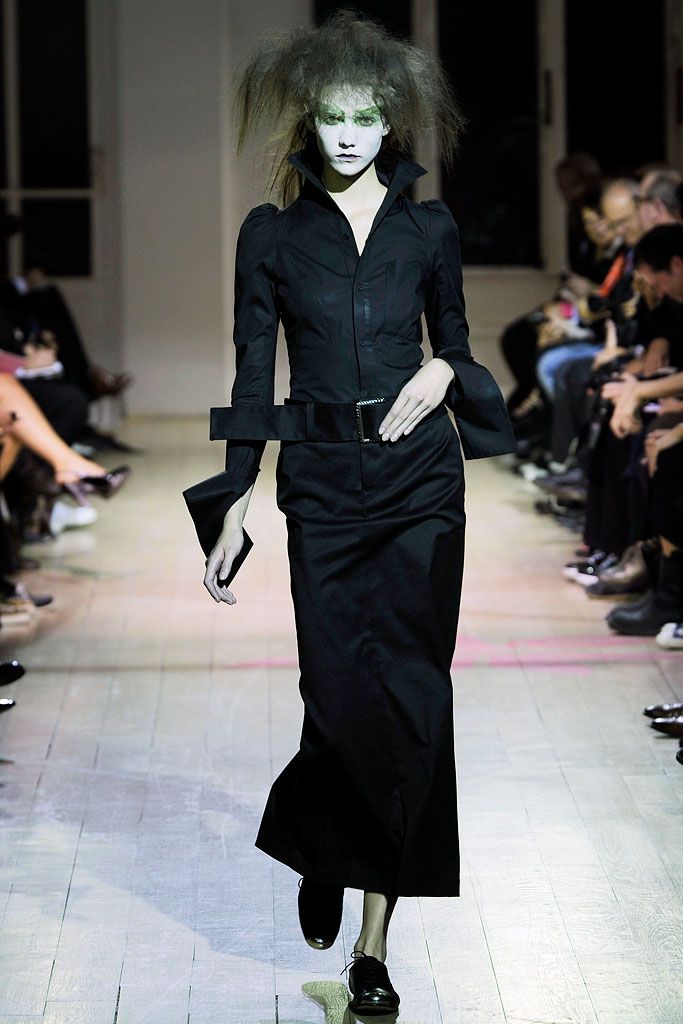

Yohji Yamamoto – SS10
Today, Yohji Yamamoto presides over a constellation of lines and collaborations, from his main label to more intimate projects, from Y’s to S’YTE, as well as unexpected partnerships with urban brands like Supreme and Dr. Martens. From the quiet shade of his workshop continue to emerge creations that defy time, trends, and expectations. After decades of work, he retains a spiritual aura untouched by fashion’s noise : that of a sage walking against the glittering current of the world.
His impact on the body is immense. By enveloping it in generous drapes and refusing the tyranny of seduction, he carved a space for introspection inside the garment itself. His fundamental avant-garde principle remains a silent revolt: a revolution without slogans, carried out seam by seam, stitch by stitch.
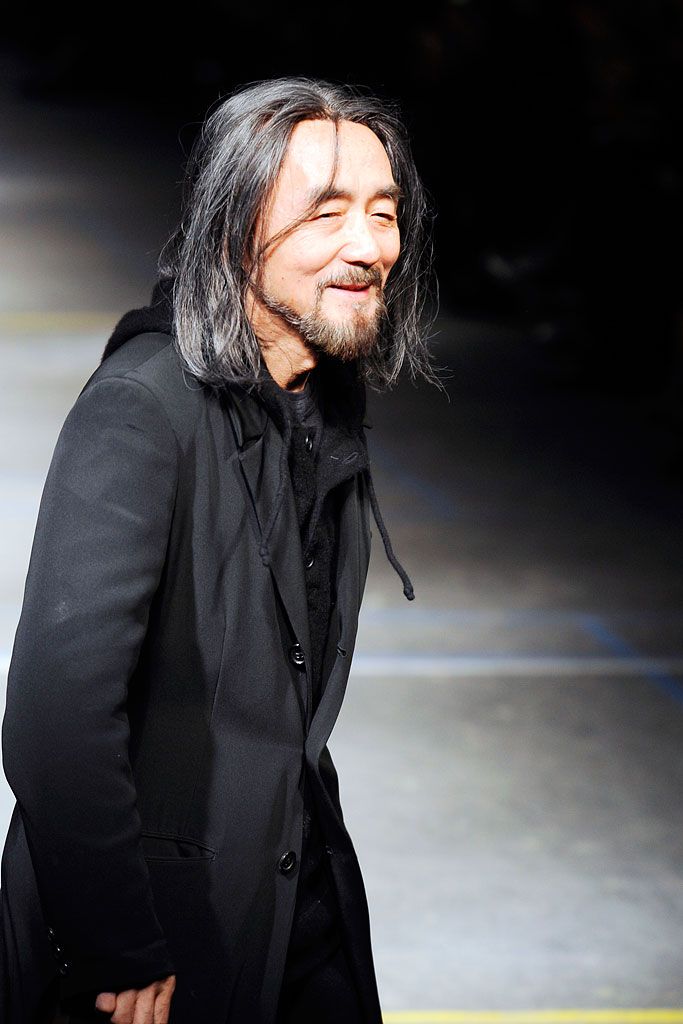
Yohji Yamamoto – AW10
Reflecting on the path of Yohji Yamamoto, one understands that true elegance is a matter of soul. His teaching urges sincerity: to choose a garment as one chooses one’s shadow : not to disguise oneself, but to find refuge. He teaches the strength of austerity, the nobility of black which gathers the essential. Like a Zen master, he whispers that fashion can be a road toward liberation rather than a masquerade, if one dares to seek beauty beyond the surface.
May each of us, in our own way, find the courage to weave our own garment of truth, far from ephemeral diktats.
Thus is fulfilled the humble and powerful message of Yohji, the apostle of shadows.