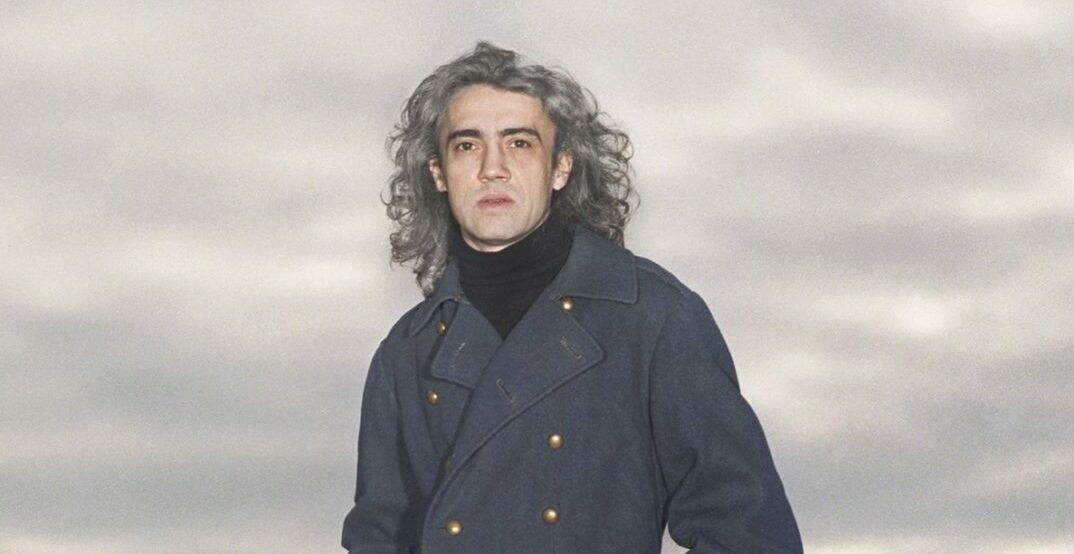
Marc Le Bihan
In the Shadows of Paris, a Tailor of Souls Threads Silence Into Garments
Marc Le Bihan crafts spectral couture far from fashion’s noise, weaving tulle, time, and tenderness into poetic silhouettes. A quiet master of artisanal melancholy, he dresses not the body, but the spirit.

In the soft shadow of a Parisian atelier, a creator works textile like a luthier carves wood, seeking to clothe not the body, but the soul of those who wear his garments. Marc Le Bihan is one of those rare artisan-poets, toiling far from the limelight, yet whose contribution to avant-garde is profound and spiritual. Born in France in the 1960s (we surmise, as he is discreet), Marc Le Bihan trained in textile arts both classically and unconventionally. In the 1980s, he honed his skills in weaving at Les Gobelins, learning ancestral tapestry techniques. Until 1990, he worked as a licier, a tapestry weaver, an experience that shaped his approach to material: for him, textile has memory, a life to be listened to.
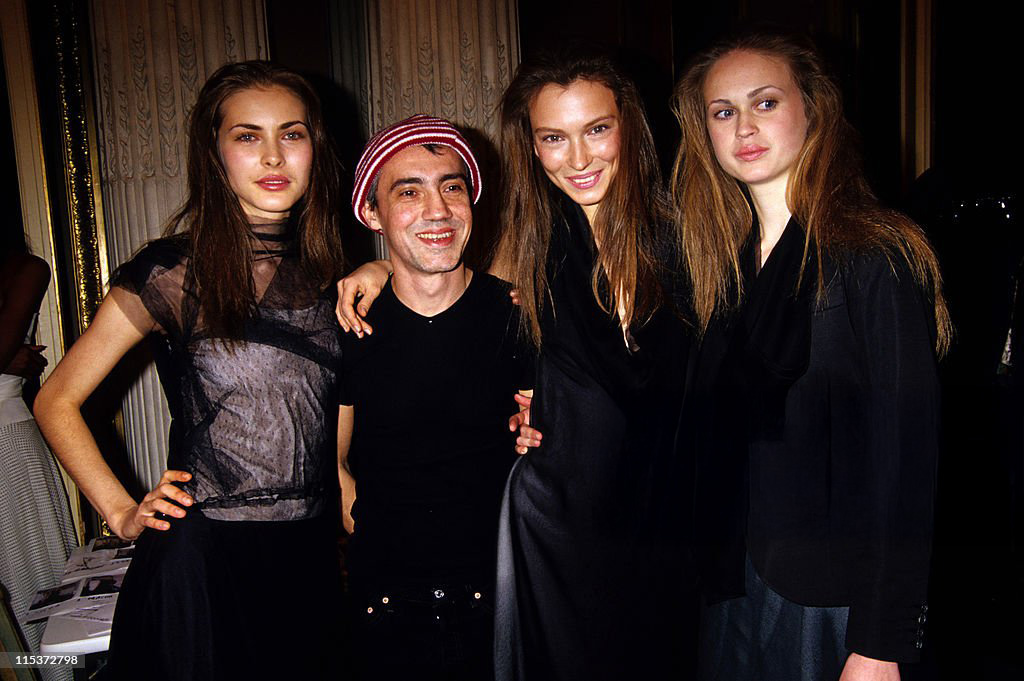
Marc Le Bihan – SS05
Afterwards, Marc Le Bihan attended the École Nationale des Arts Décoratifs in Paris, studying textile design, and presented his first experimental collections there in 1990.
Already his taste for non-conformism showed: one collection used old jute mail sacks and cut-up linen sheets to create spectacular dresses, combining rusticity and elegance. This bold work earned him a Special Prize at the 1993 Hyères Fashion Festival. Buoyed by recognition and an ANDAM grant in 1994, he founded his eponymous house.
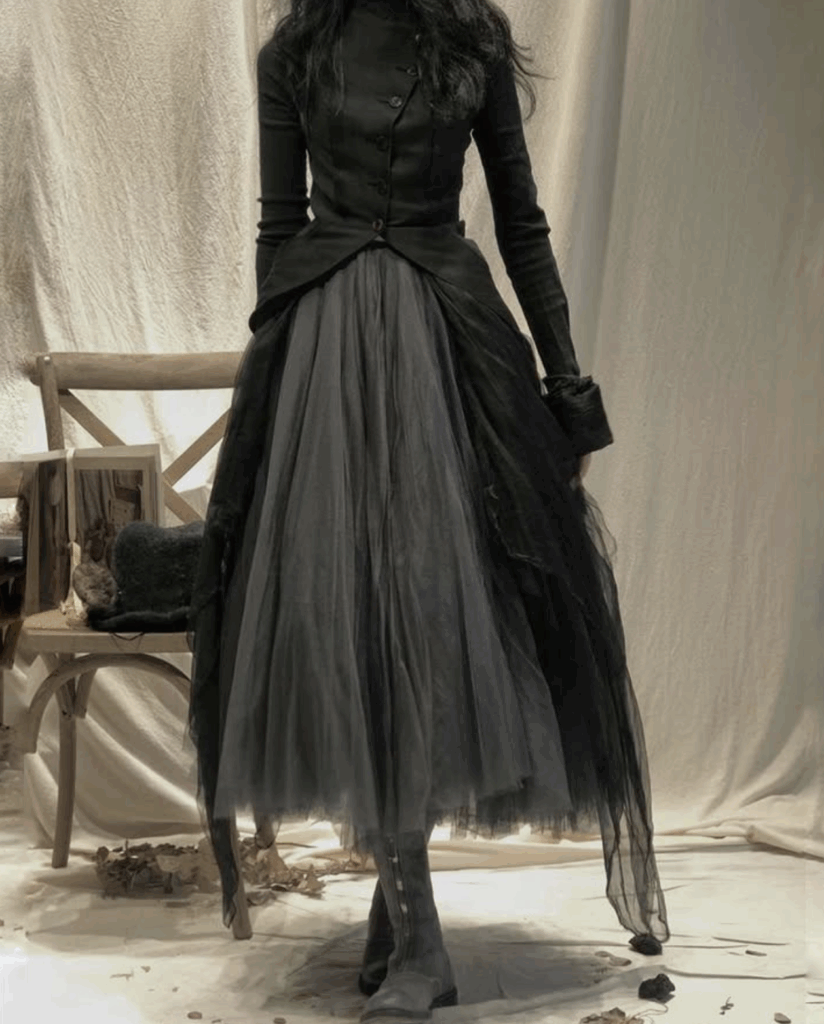
Marc Le Bihan classic silouhette
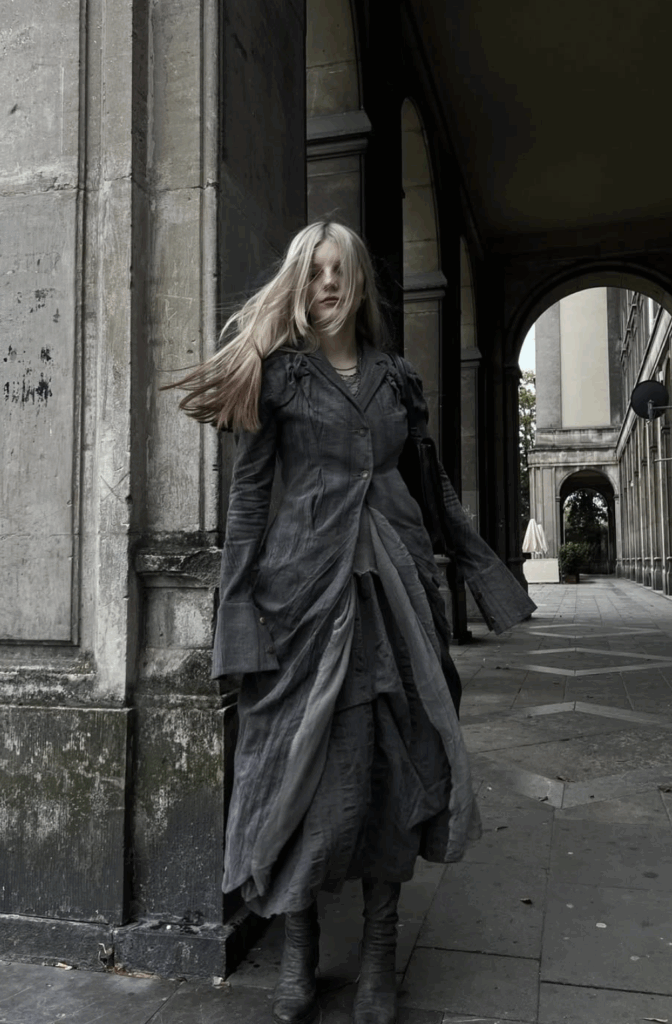
@ola.laszkiewicz wearing Marc Le Bihan
From the outset, Le Bihan established himself as an enchanter of clothing. Far from the flashy trends of the ’90s, he offered a dreamlike, timeless wardrobe. His dresses seem to come from a romantic dream: layers of tulle with raw edges, aged lace, silks deliberately crumpled to give them the soul of an antique piece. He loves to work noble materials, cotton, linen, silk, wool, and apply artisanal treatments: botanical dyes, partial bleachings, patinas. Every piece shows traces of the hand, perfect imperfections of the handmade. No loud logos or marketing noise; his garments are almost anonymous so that only their form and texture speak.
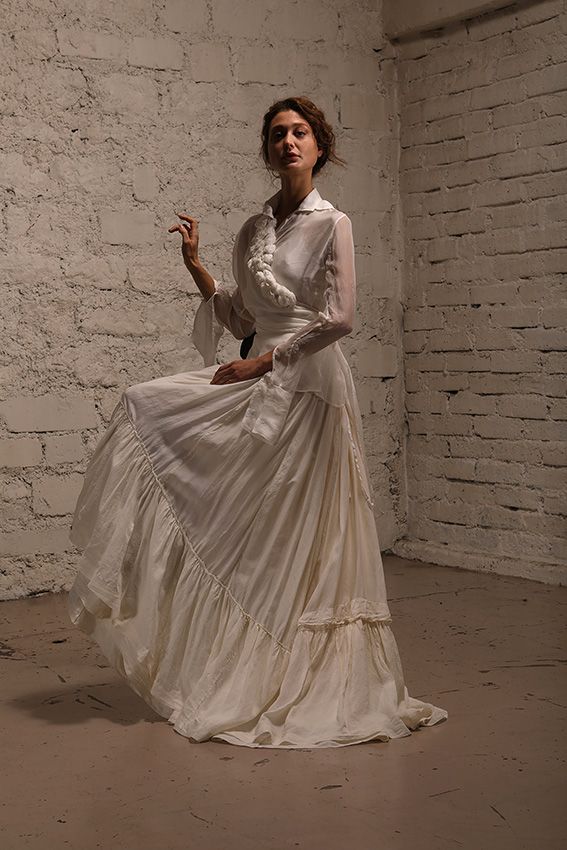
Marc Le Bihan silhouette
Marc Le Bihan conceives his collections like writing poetry anthologies. He doesn’t follow the frantic seasonal cycle; indeed he’s rarely shown on runways, preferring word-of-mouth among connoisseurs. People say of his creations that they’re “like a second skin, a shroud and a swaddling cloth.” He himself has evoked the concept of “lango and shroud”, the first and last fabrics to wrap the human body, at birth and at death. This philosophy clearly informs his work: he seeks to accompany life’s cycle through clothing, from cradle to grave. His pieces in white cotton evoke an infant’s swaddle; his black veils recall funeral garb. Between these two, he certainly designs for daily life, but always with a sense of ritual. In 2004, he was invited as a guest member on the Paris Haute Couture calendar, cementing the precious, rarefied nature of his work. He also launched a diffusion line in 2007, Korda, to extend his universe without diluting it.
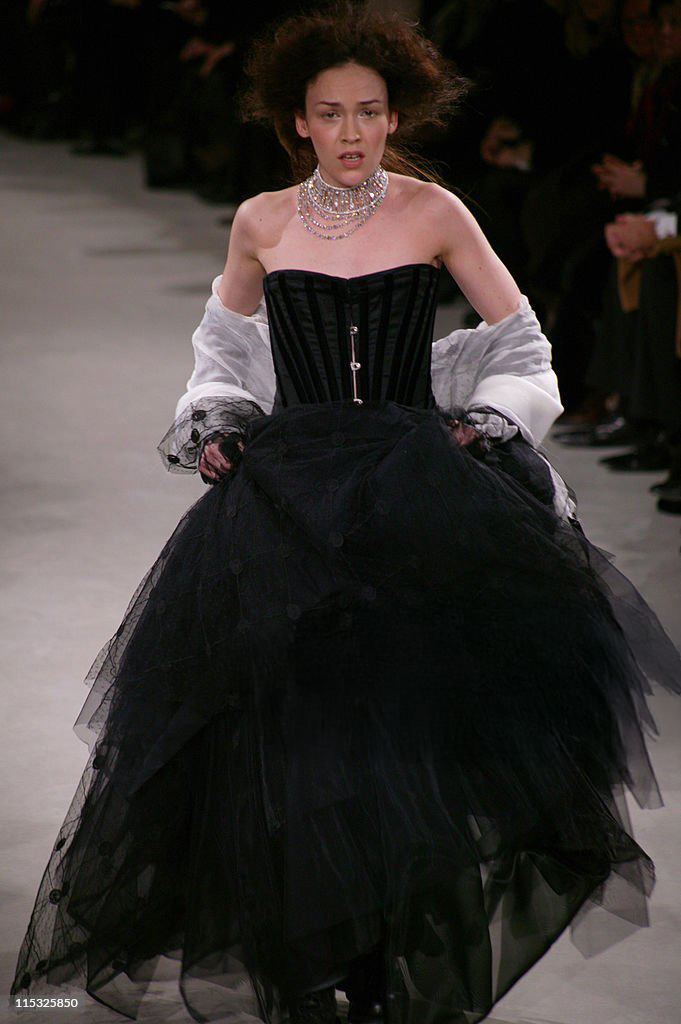
Marc Le Bihan – SS07
What strikes one about a Marc Le Bihan garment is the deep luminous melancholy it exudes. One of his iconic dresses is a black tulle dress with multiple jagged layers, edges burnt slightly, like the wings of a moth emerging from flame. His jackets often have deconstructed yet subtle cuts, allowing the body to move freely, he thinks of comfort despite the dramatic appearance. He draws on historical cuts (corsets, frock coats, crinolines) which he deconstructs to leave only a floating suggestion. It’s as if he dresses ghosts or memories, not living mannequins.
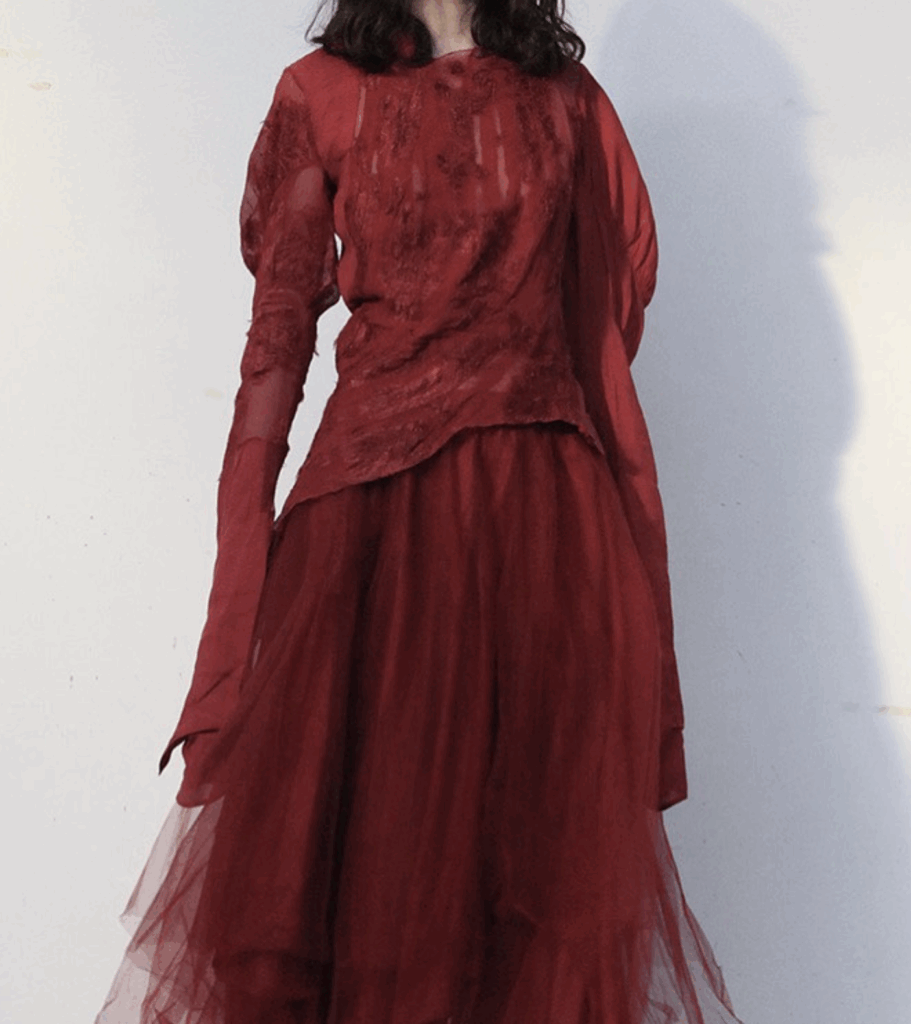
@buyer_wang wearing Marc Le Bihan
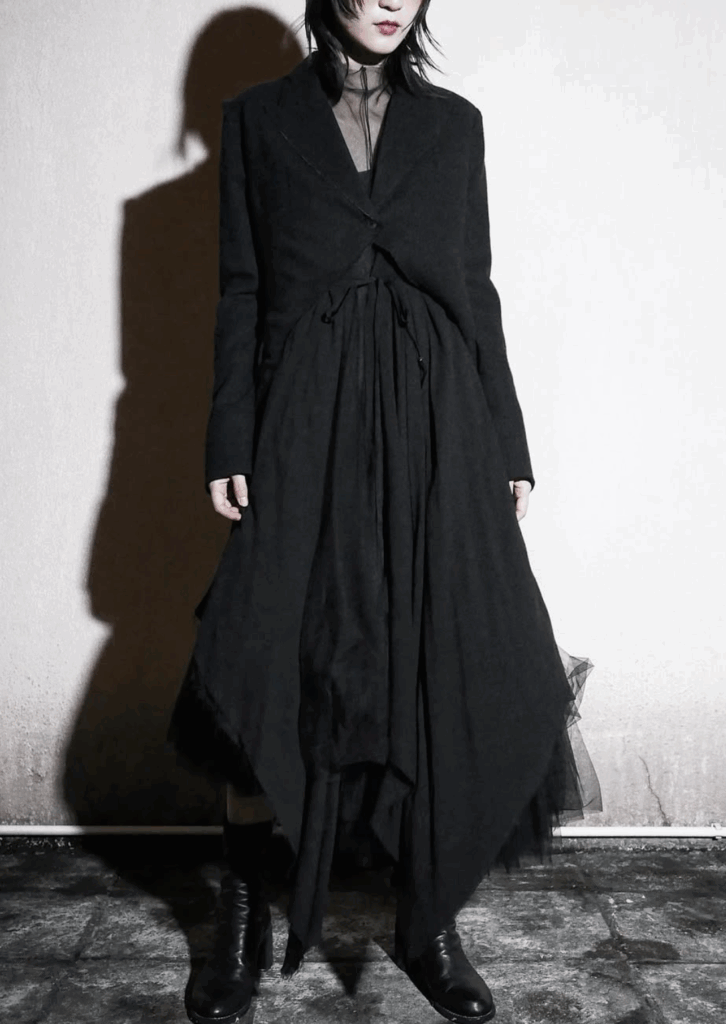
@inkclothing wearing Marc Le Bihan
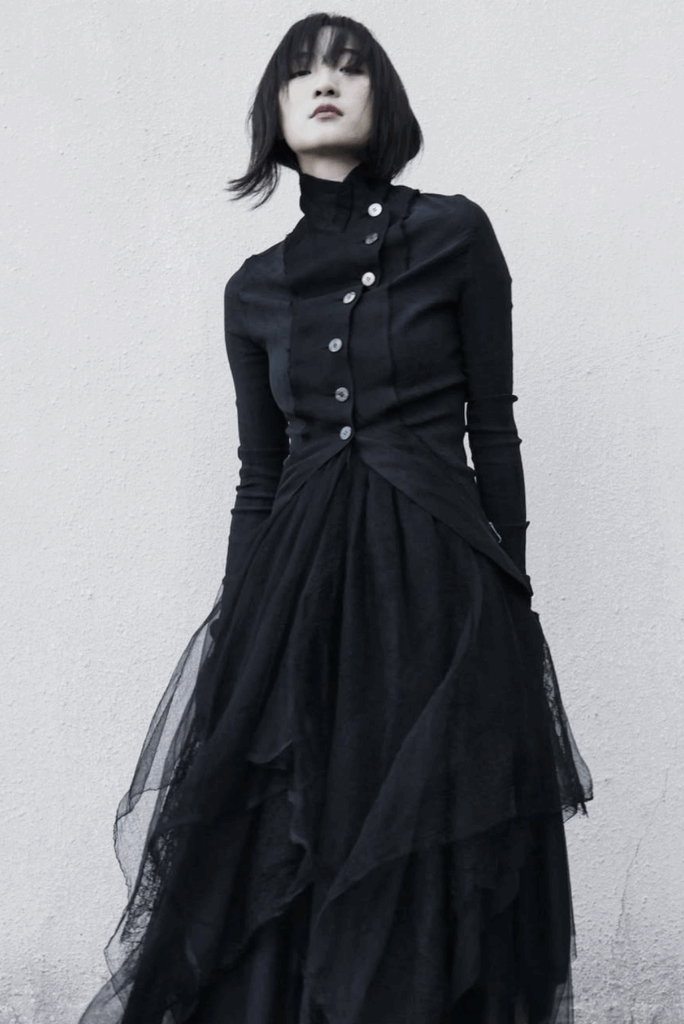
@inkclothing wearing Marc Le Bihan
Marc Le Bihan’s spiritual impact on fashion is to have reminded the industry of interiority. While many design for outward image, he designs for inward feeling. Wearing Le Bihan is like feeling you’re a character from a beloved novel, enveloped in mystery, tied to a long history, utterly unique. He influenced currents of so-called “dark romantic” or “artisan” fashion, alongside figures like Ann Demeulemeester or Olivier Theyskens, but with his own vein: more subterranean, humble, very close to artisanal art.
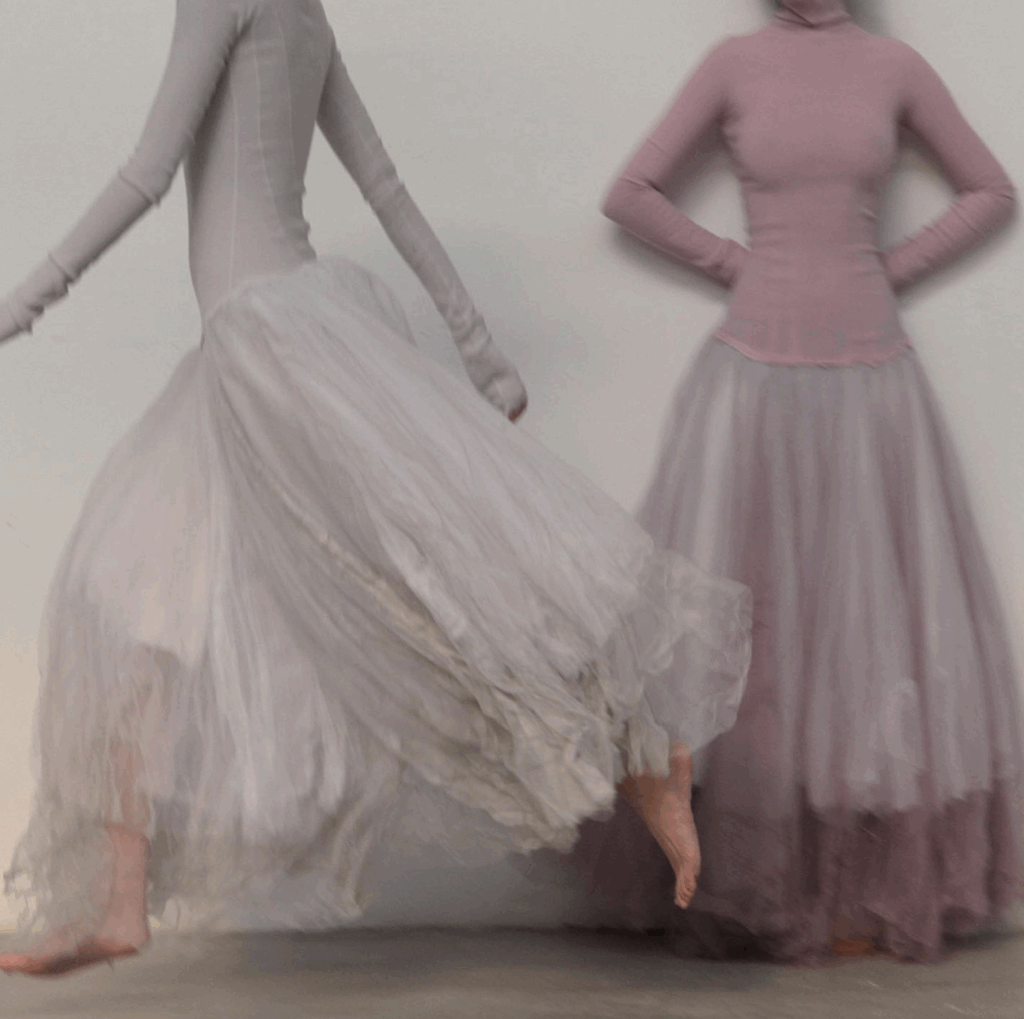
@buyer__wang wearing Marc Le Bihan
Reflecting on the path of Marc Le Bihan, one learns the value of silence and depth in a world of noise and superficiality. He teaches that to create something that touches the soul, you must put your own soul into it, in other words, absolute sincerity. Le Bihan doesn’t follow trends; he follows his inner thread, weaving it patiently year after year. His success, though far from media hype, shows it’s possible to carve a coherent path and draw like-minded souls to you without shouting. In a sense, he renews faith that if one creates with true depth, the audience will eventually feel it.
To apply his teaching in our lives is to perhaps: value authenticity and quality over fleeting appearance. It is to take time to do things well, to refine the work of our life, whether artistic, professional or personal. It’s also to accept the beauty of imperfection, those rough edges and intentional tears in his fabrics tell a story rather than display cold perfection. Marc Le Bihan invites us to see our clothes, and by extension our acts, not as mere functional items but as carriers of meaning. He often ends his shows with a thought, a meditative line to the guests, rather than a simple bow.
May each of us seek to clothe our soul before adorning our ego, that is what his sacred philosophy implies. In other words, cultivate one’s inner self and let the outer be its authentic reflection. Marc Le Bihan, tailor of souls, shows a path of humble, spiritual, sustainable creation. To follow that path is to ensure our creations, be it art, relationships, or even our daily routine, have a soul and not just a surface. That is how garment transcends fabric to become an extension of our true being.
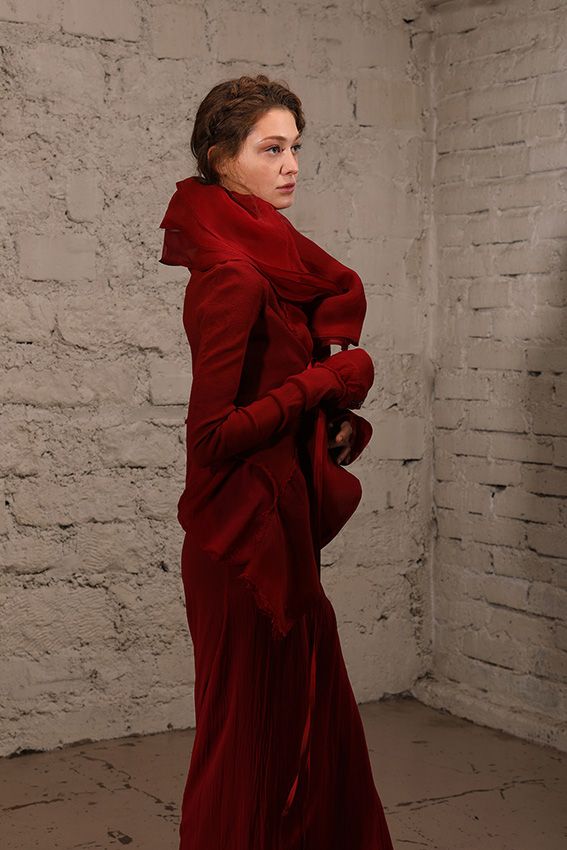
Marc Le Bihan – FW21
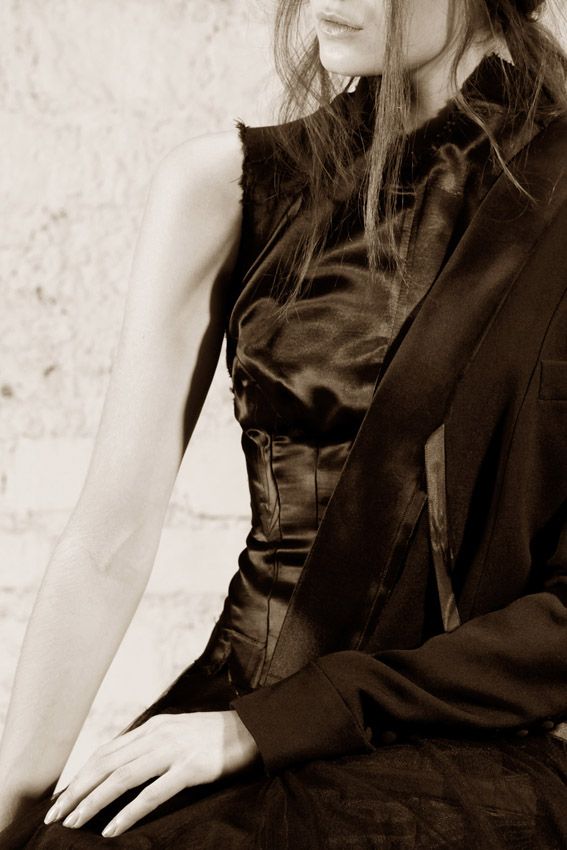
Marc Le Bihan – FW21
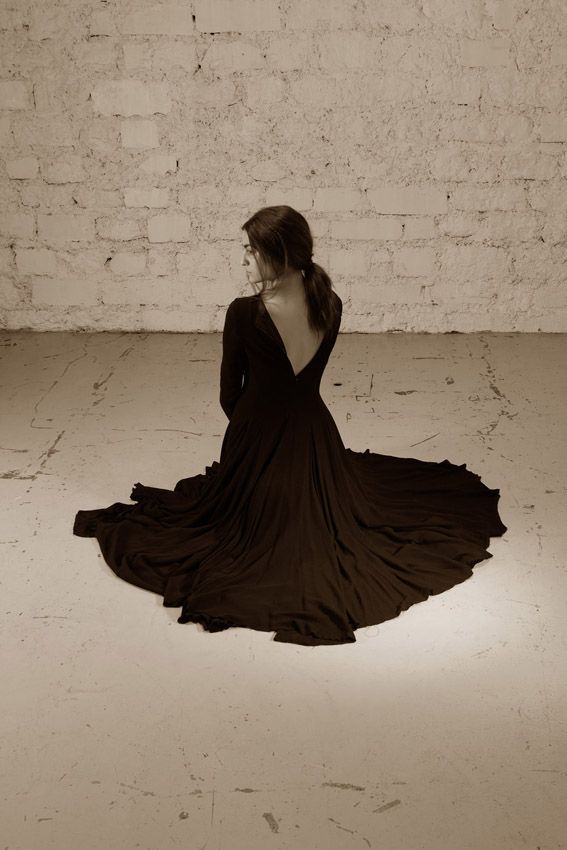
Marcl Le Bihan – FW20