Petra Fagerström re-interprets how conditioned dynamics imprint on womanhood
The Swedish designer presented her first London Fashion Week collection as an independent brand at Studio Smithfield.
Emerging womenswear designer Petra Fagerström often begins her practice with a narrative that challenges stereotypes placed on women. Last season, for her MA Design graduate collection from Central Saint Martins, she explored the rise of conservative ‘trad wife’ influencers on social media and, in 2022, her ITS Contest application collection was inspired by her grandmother, who was a Soviet military parachuter.
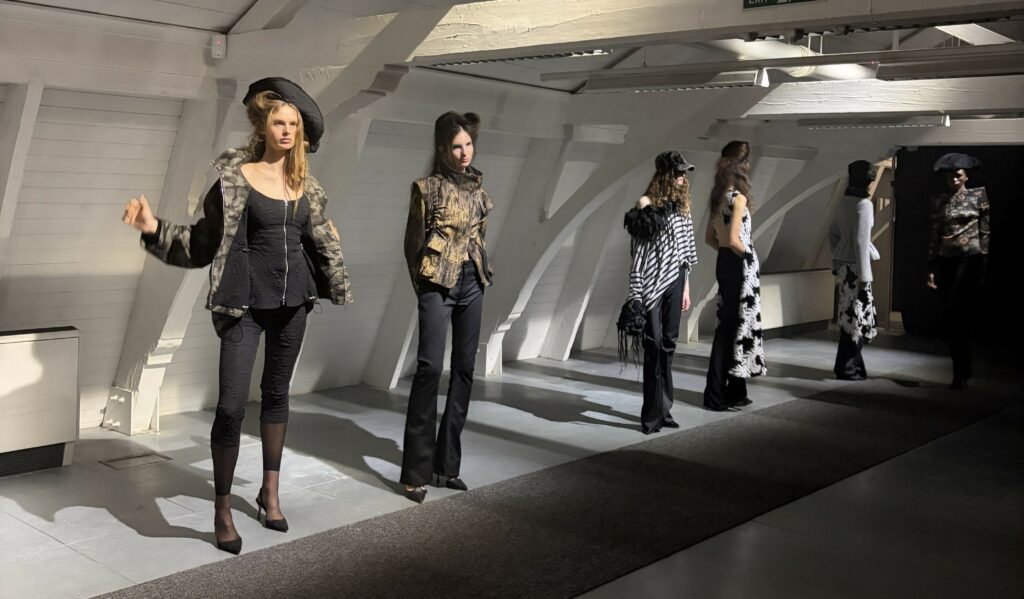
For the Autumn/Winter 2026 presentation, titled Everything I Did For You, the starting concept explored a context in which women are frequently villainised. Fagerström drew on her own experience as a protégée skater, using the ‘coach-skater’ or ‘mother-daughter’ dynamic, often indistinguishable, as noted in the press release, as the emotional core of the work.
Fagerström explains: “The mother, or coach, lives through the girl: she channels her own memory, her unfulfilled ambitions, and her prodigy into the girl’s performance. Yet, in doing so, the mother disappears as a subject herself. There are few stories or portraits that belong to her alone; the story stops being about her.” When portrayed, she is often painted satirically or as a villain.
As with much of Fagerström’s storytelling, the aim was not to reinforce this caricature but to complicate it. “I wanted to give attention to the woman, not as she was but as who she is. I wanted the collection to grow from empathising with her rather than villainising her, to highlight her rather than erase her.”
The collection did not reference literal figure skating costumes. Instead, it echoed the structural tensions embedded within them. Skating garments must enable speed and protection while maintaining the illusion of effortless grace. They demand discipline from the body while projecting elegance, a fragile equilibrium between technical precision and aesthetic beauty. In this sense, the collection becomes an analogue: garments constructed at the intersection of control, performance, and restraint.
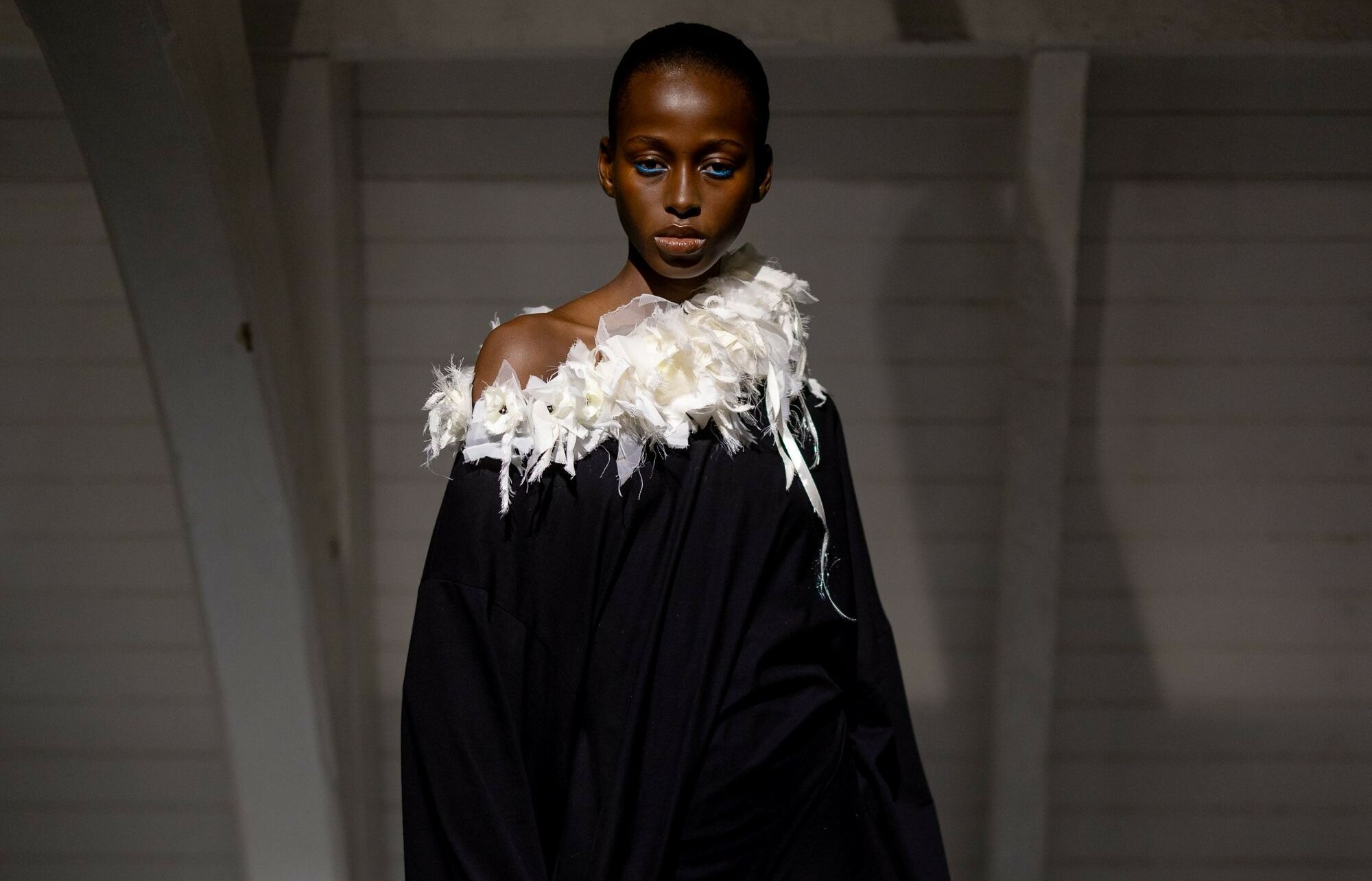
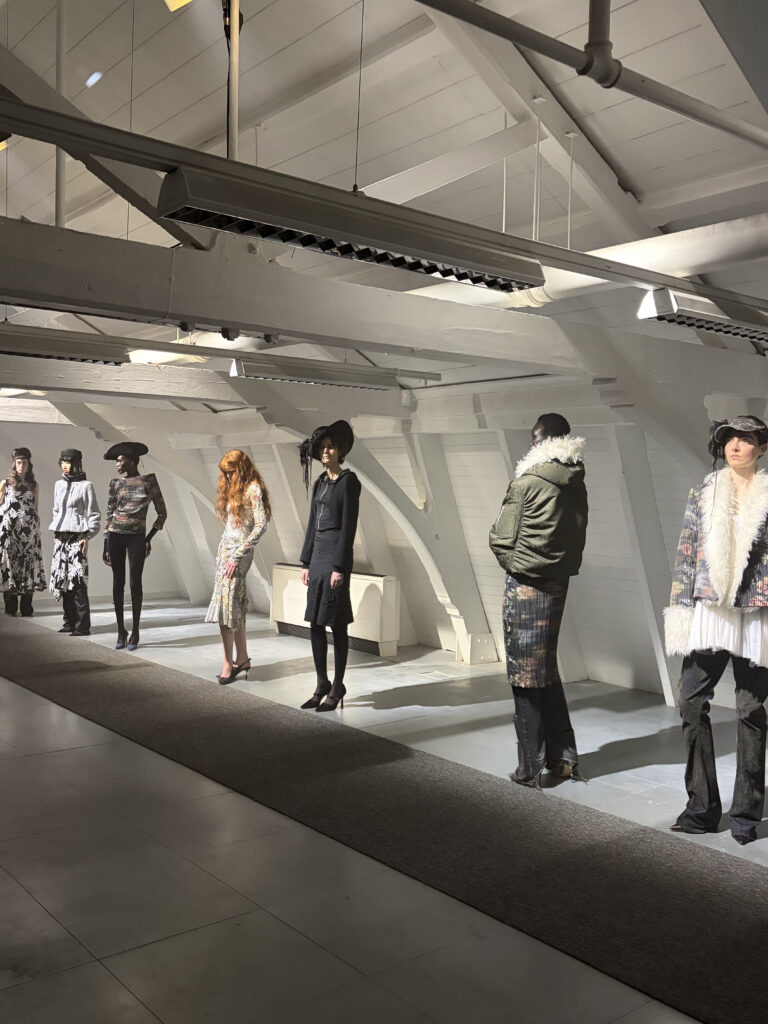
Fagerström’s AW 2026 collection was, in some way, the perfect analogy for this. For instance, one look featured a technical white puffer coat that had been unconventionally constructed to sit proudly open, revealing a custom floral print in the inner lining. There were also several sequin gowns that had been finished to allow the garments to move fluidly despite the weight of the fabrications.
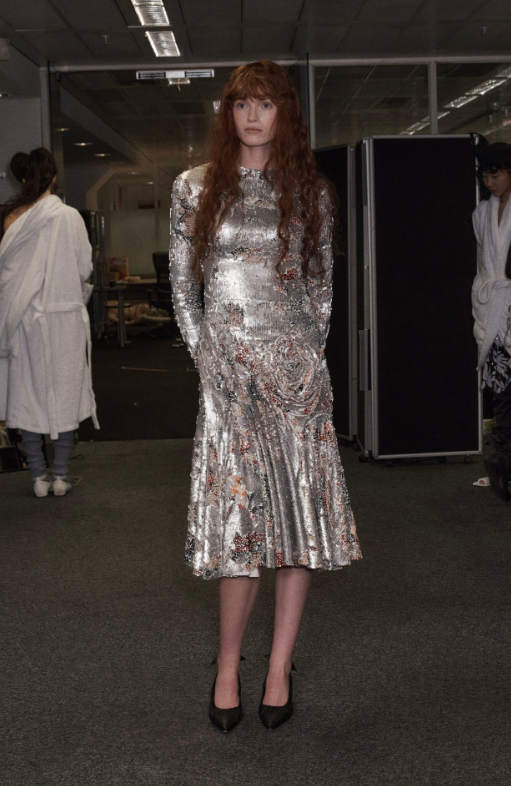
Additionally, Fagerström’s signature pleat technique was sprinkled throughout the collection. The ‘lenticular’ pleats are a self-developed material manipulation technique in which she creates precise pleats by hand. On the pleats, she develops a motif in collaboration with AI technology that is then used at different angles on each side, so that as the wearer moves, an illusion of the image shifting in an almost holographic way is achieved.
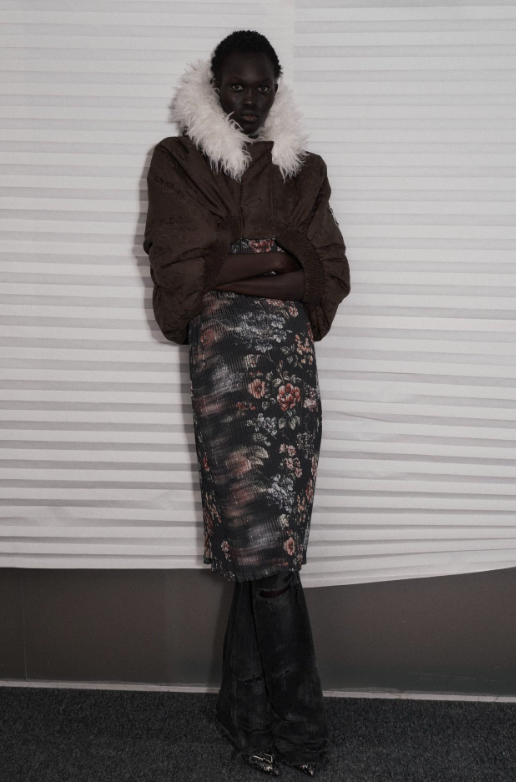
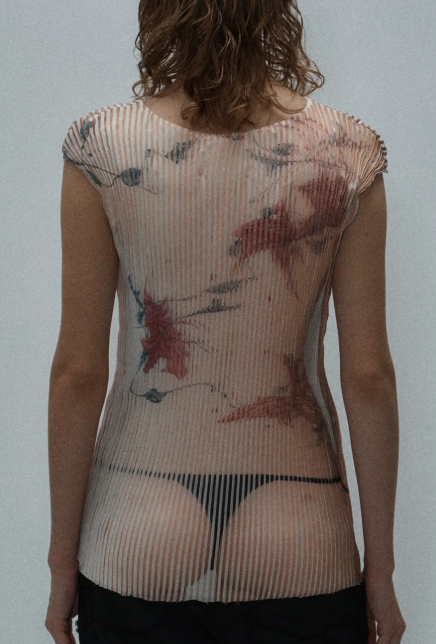
This season, the same floral print was used on the pleats, as well as on a monochrome pleated T-shirt featuring the motif of a female body.
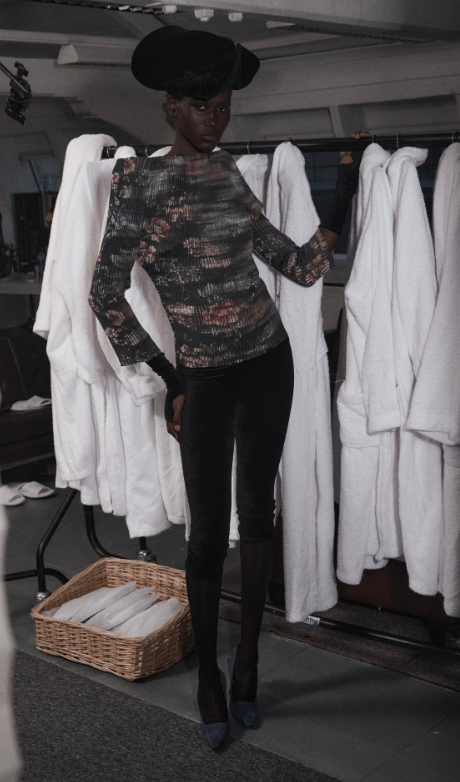
Fagerström also embraces AI to warp previous silhouettes and, through an ongoing human-led creative process, generates new possibilities for garment construction that she then creates physically through a high level of technical skill and craft, as seen in the upside-down bomber jacket that perfectly cradled the model’s arms and the angular shoulder pads on the floral pleat top.
It’s this rare combination of deep research, technical craft, and an embrace of obscure technological techniques that places her on a clear path to be among the greats in the future of fashion.
Crédits
Written by Grace Robinson