Getting to the Bones of It: When Morbid Curiosity Meets Fashion
Exploring the use of bones and skeletons as imagery and motifs across avant-garde fashion and design
Bones have been a recurring motif across avant-garde fashion, often used by designers to explore themes of the body, mortality, and surrealism. Elsa Schiaparelli designed the famous Skeleton Dress in collaboration with Salvador Dalí in 1938. At the time, it was viewed as a modern concept and is often considered one of the earliest instances of skeletal imagery in fashion. The floor-length, figure-hugging gown was composed of silk crêpe with a fine matte sheen; the black fabric acted as a second skin, sheathing the wearer from head to toe. What gave the dress its name was Schiaparelli’s use of the trapunto quilting technique, which used cotton wadding within the garment to resemble protruding bones, in particular the rib cage, hips, leg bones, and vertebrae.
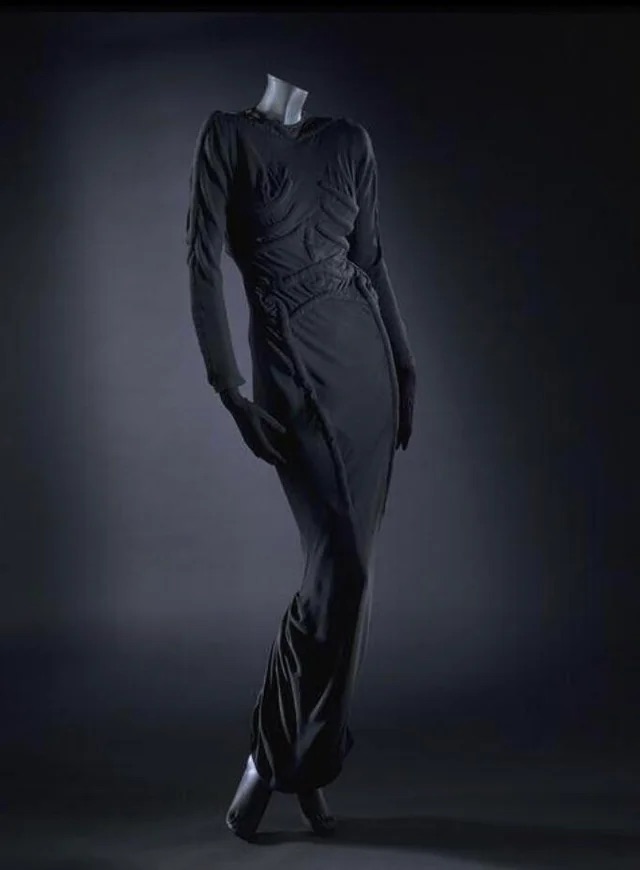
Schiaparelli, 1938
Since Daniel Roseberry took the helm of Schiaparelli in 2019, the designer has frequently referenced the now-iconic Skeleton Dress and the house’s surrealist heritage, incorporating body parts into garments whether in the form of organs, ears, nipples, or bones. The Spring/Summer 2020 collection featured a direct tribute to the original, a floor-length black crêpe dress with an open décolletage framed by mesh and embroidery highlighting the rib cage, hips, leg bones, and arms. Roseberry has said that the combination of body parts and surrealism has “turned into sort of a code of the house and a staple. It’s as if a legacy of my work here has been to walk through the door that the bone dress opened and exploit that in infinite variations.”
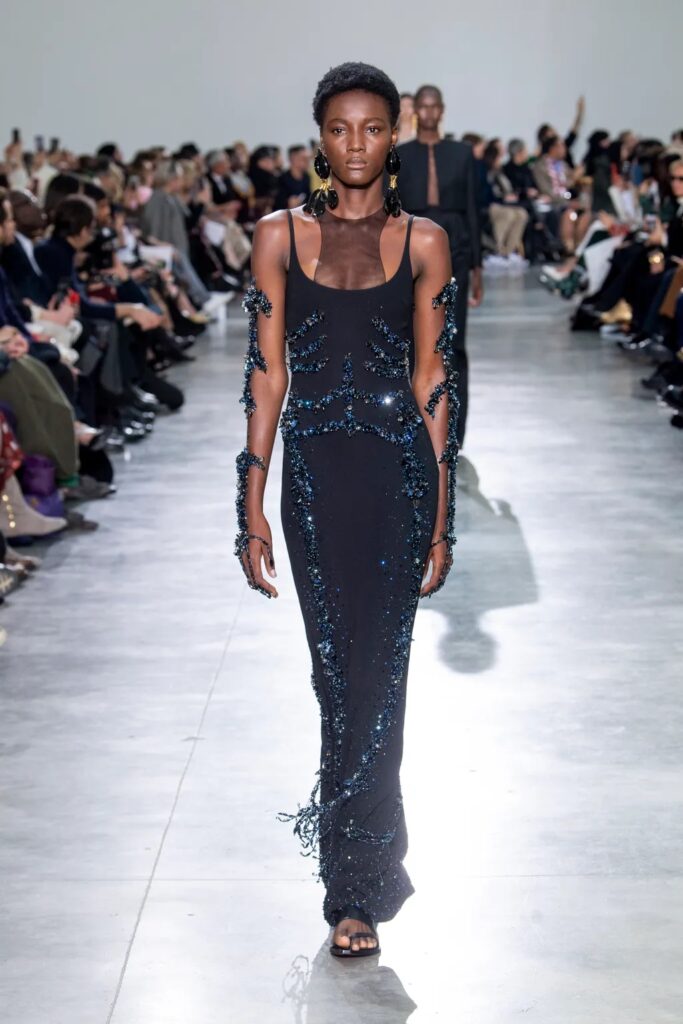
Schiaparelli, SS20
It is not just Schiaparelli that finds inspiration in the human form. Many designers use skeletal imagery, and bones have long played a role in fashion history. While popular imagination may picture early humans wearing bones as accessories like characters from The Flintstones, bones were more often used as tools for creating clothing. They scraped hides that were then worn to survive harsh climates. In 2023, ScienceNews reported that an animal bone fragment found at an archaeological dig in Barcelona, marked with human-made pits, likely served as a punch board for leatherwork. The Journal of Archaeological Science also notes the earliest evidence of human bone used as raw material for ornaments appears in Aurignacian sites in France (35,000–31,000 BC), where perforated teeth were discovered.
Throughout history, bones and skeletons have carried symbolic and ceremonial meaning in adornment. Ancient Aztec, Mexican, and Maya cultures incorporated real skulls in masks and headdresses for rituals honoring ancestors and the spiritual realm. These bones were often combined with jade and obsidian. Today, during Mexico’s Day of the Dead festival, skulls and bones appear as sugar candies, make-up, or plastic ornaments rather than real remains, though the sentiment and ceremonial significance remain. In Western culture, the skull became a countercultural emblem through punk, symbolizing rebellion and nonconformity across album covers, tattoos, leather jackets, and patches before evolving into a mainstream motif in the 21st century.
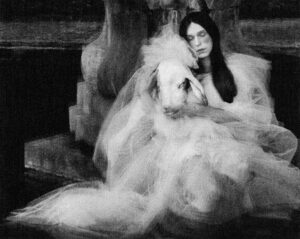
In 1995, fashion photographer Richard Avedon strayed from his usual style to create a 24-page spread for The New Yorker titled In Memory of the Late Mr. and Mrs. Comfort. It starred model Nadja Auermann wearing glamorous designs by Maison Margiela, Chanel, John Galliano, Comme des Garçons, and Alexander McQueen alongside a skeleton styled as her husband. The unlikely couple told a bittersweet fable of family life in disarray. Some interpreted the editorial as Avedon’s critique of consumer culture and the fashion industry; others as a reminder that fashion is an illusion, and underneath, everyone is the same. The story echoed poet and philosopher Giacomo Leopardi’s Dialogue Between Fashion and Death, where fashion admits: “we both equally profit by the incessant change and destruction of things.”
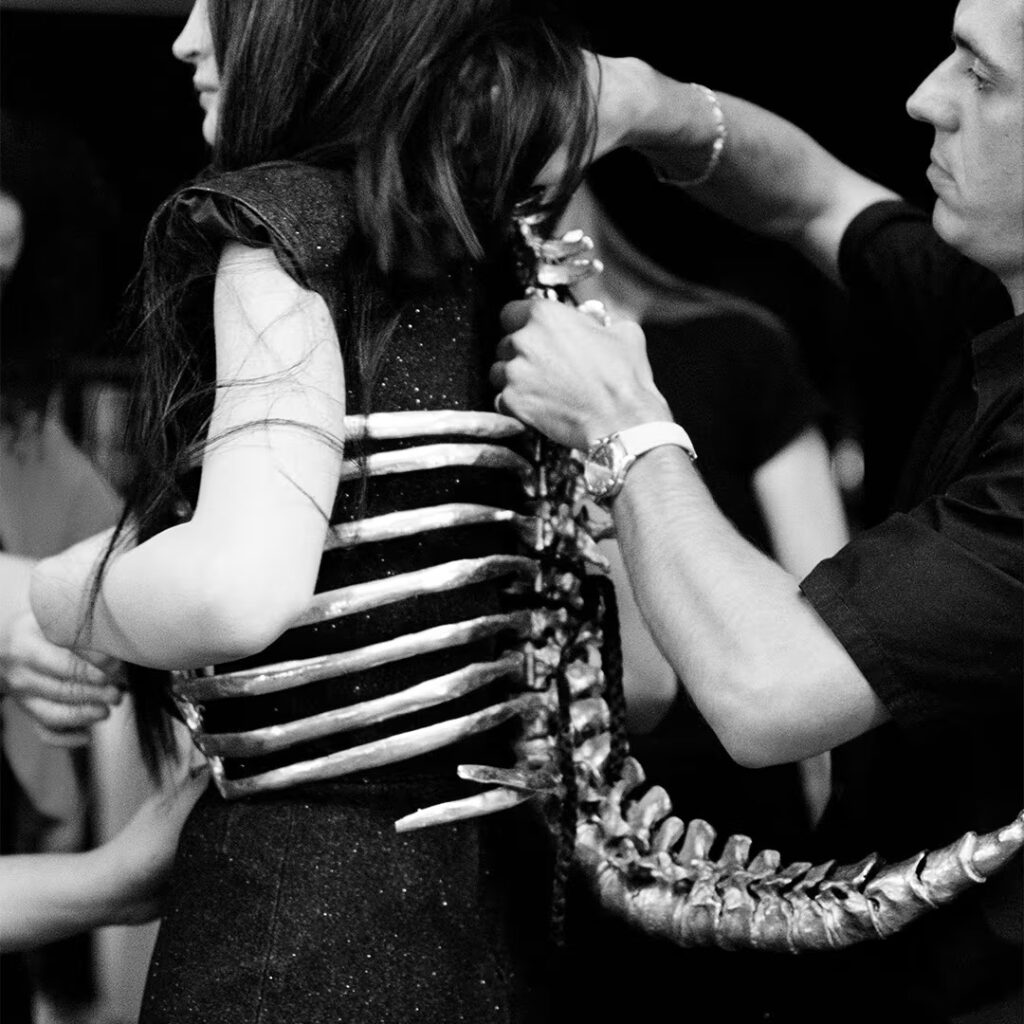
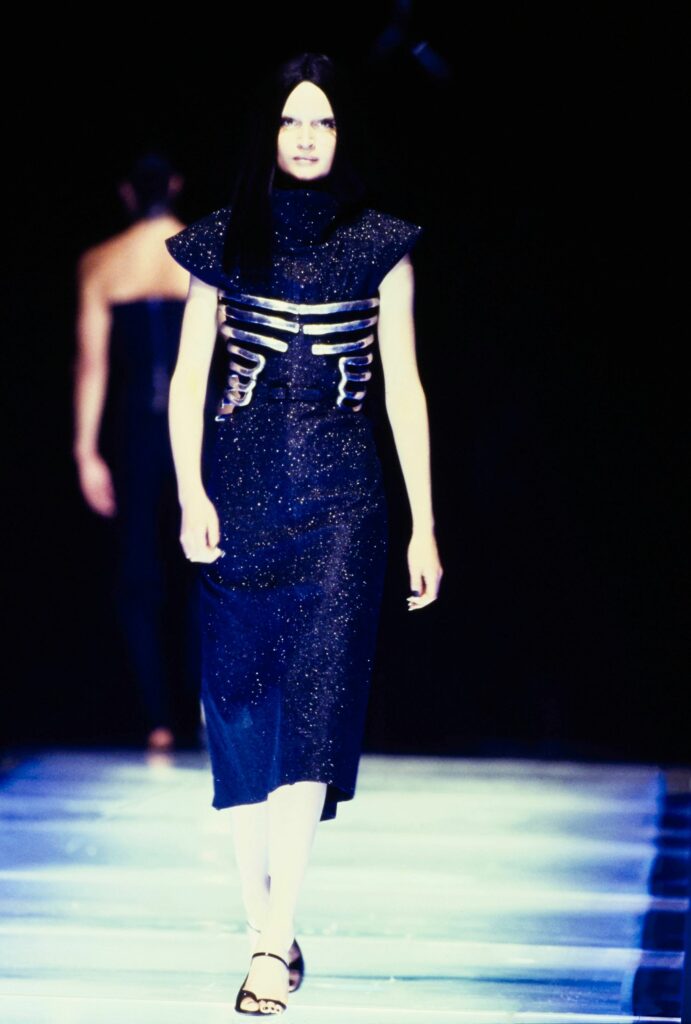
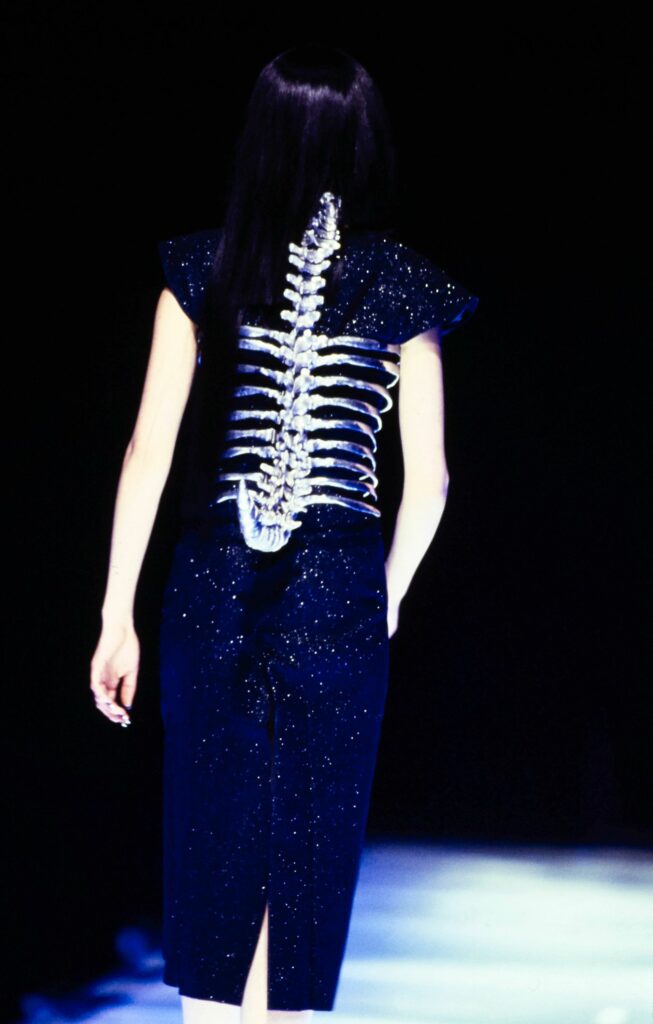
Alexander McQueen, SS98
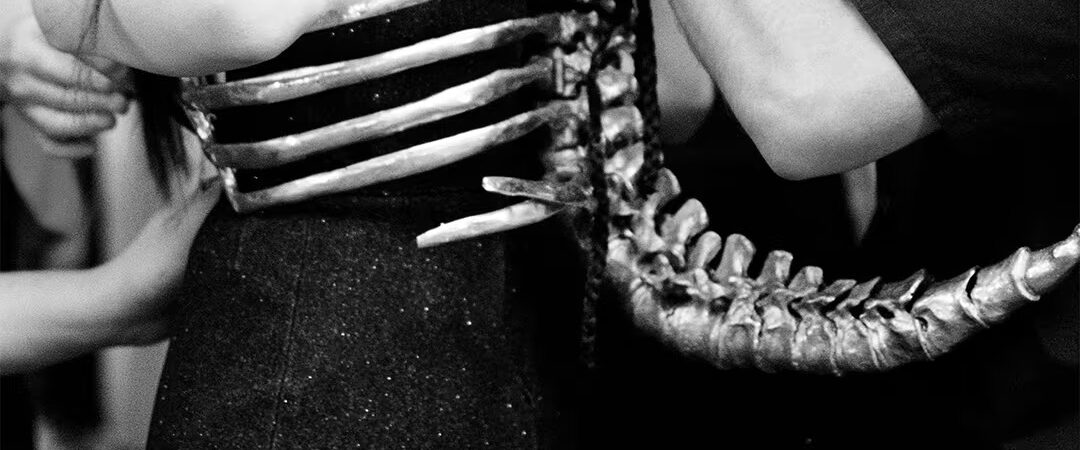
The 2000s brought a commercial explosion of skulls, most famously in Alexander McQueen’s skull scarf, worn by the Olsen twins, Sienna Miller, and Kate Moss. Recently, Charli XCX performed in one at Glastonbury, and Timothée Chalamet was photographed in one, suggesting a resurgence. McQueen’s fascination with skeletal imagery ran deeper, with one of the most iconic examples being the Spine Corset, created by jeweler Shaun Leane for McQueen’s Spring/Summer 1998 show. Cast from a real human skeleton, it was made from aluminum and leather and worn over a shimmering black dress, directly referencing Schiaparelli’s Skeleton Dress.
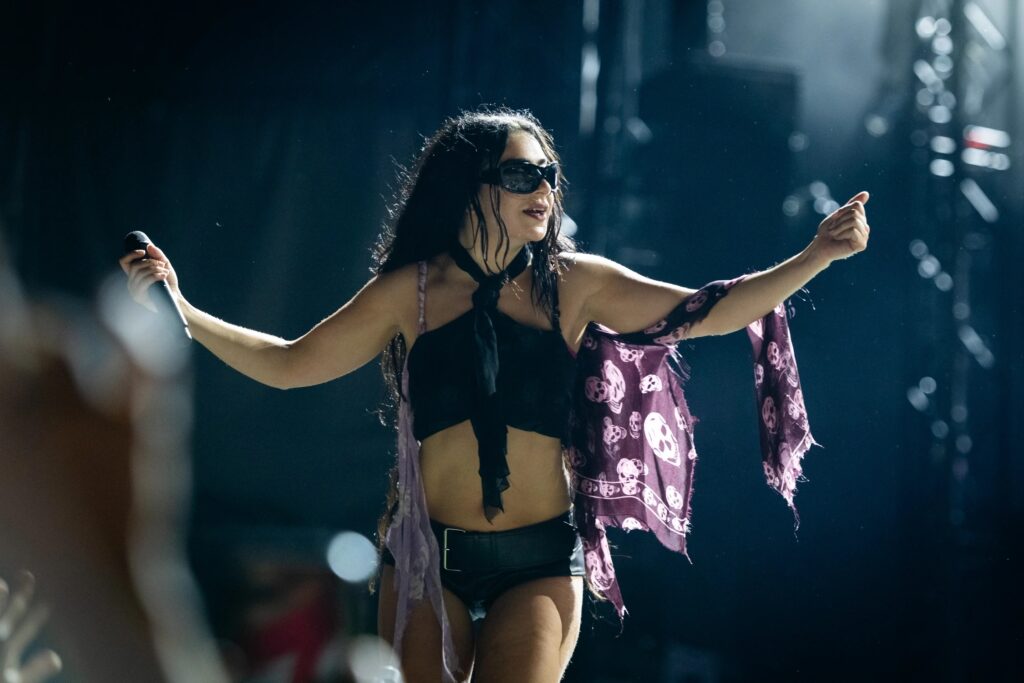
Charli XCX at Glastonbury, 2025.
McQueen often used death and decay as macabre humor. For his Autumn/Winter 1996 Dante collection, he placed a skeleton in the front row among critics such as Suzy Menkes, mocking the fashion press. Simon Costin designed a skeletal headdress for the show, inspired by McQueen’s idea. Using a real skeleton purchased years earlier, Costin built a wire frame covered in black glass beads, with one skeletal hand sewn into a lace face covering. The collection drew from Dante Alighieri’s Divine Comedy, where religion, war, and human duality unfold in an allegorical journey through the afterlife.
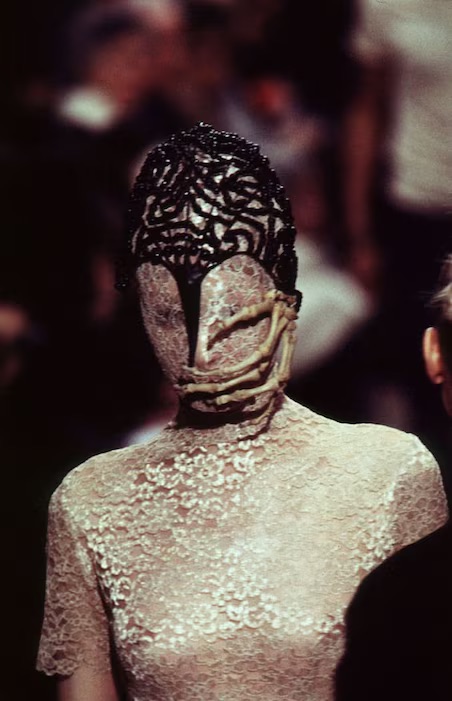
Alexander McQueen, AW96
Jean Paul Gaultier also explored the spine in his Spring/Summer 2010 Haute Couture collection with a golden gown whose criss-crossing design evoked vertebrae. For Autumn/Winter 2010 Haute Couture, he collaborated with La Perla on a skeleton corset worn by Dita Von Teese. Encrusted with Swarovski crystals, it featured sheer panels across the waist, rib cages over the breasts, and a hip-bone garter belt, marrying glamour with the grotesque.
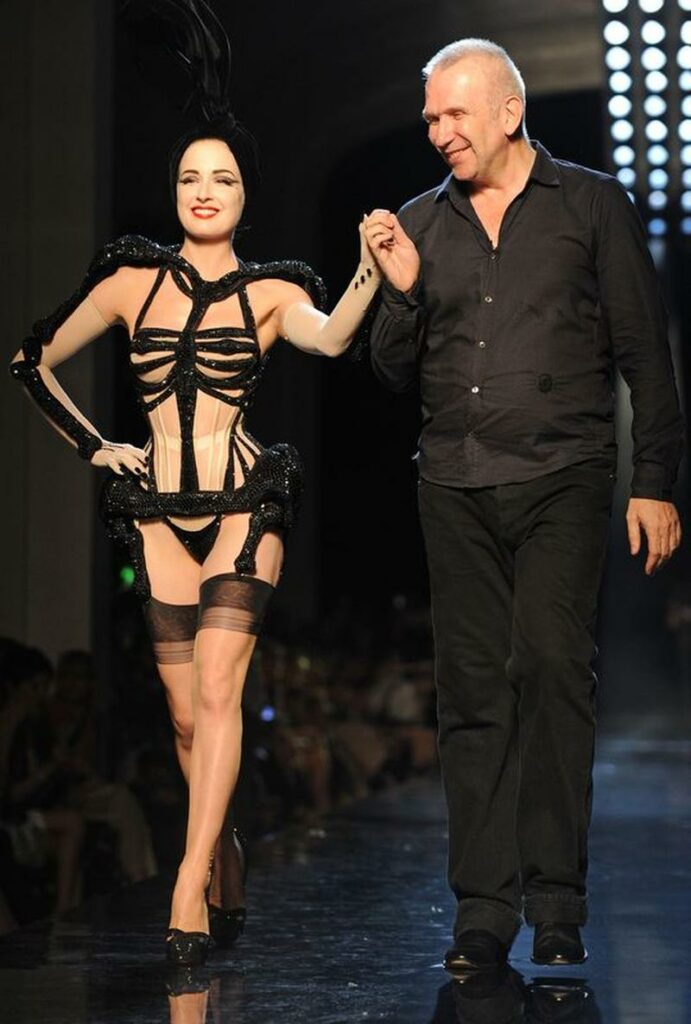
Jean Paul Gaultier and Dita Von Teese, AW10
Designer Iris van Herpen, celebrated for her use of technology, collaborated with architect Isaïe Boch for her Autumn/Winter 2011 Haute Couture debut, creating a 3D-printed skeleton-like dress of rigid nylon. The structure, resembling human bones, was unwearable in conventional terms, with fragility that mirrored the way real bones age. Inspired by Michael Hansmeyer’s algorithmic architecture, Van Herpen sought to turn the body inside out. The piece, now in The Met’s collection, continues to degrade as it ages, its materiality echoing the mortality it represents.
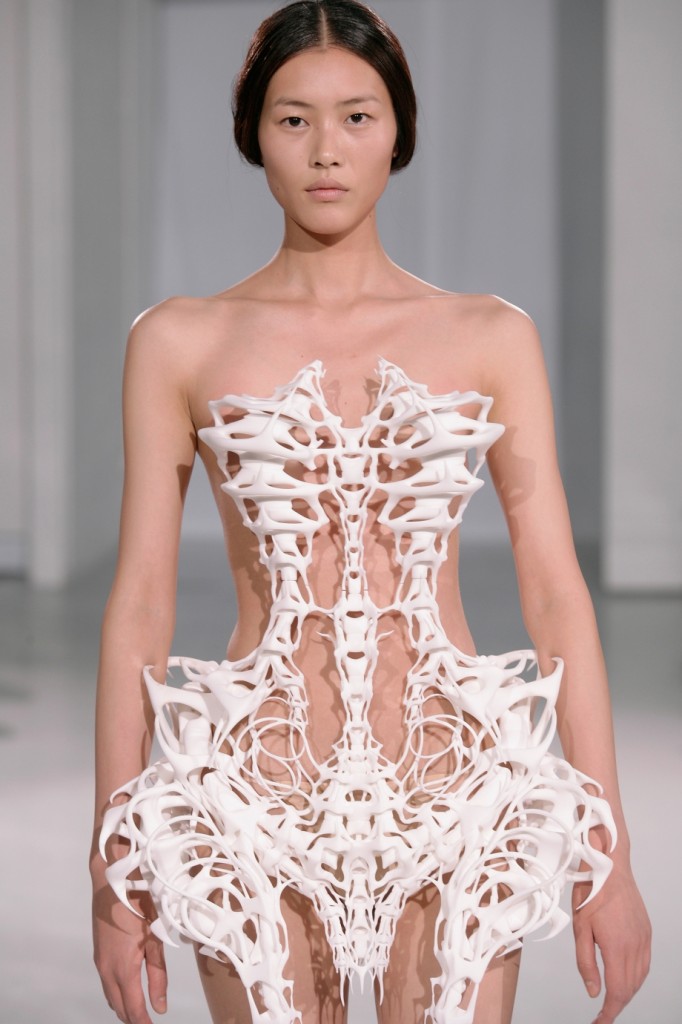
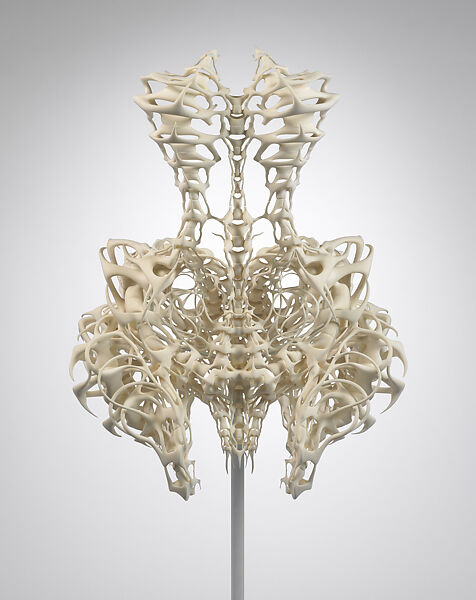
Iris Van Herpen, FW11
More recently, American label Area presented Autumn/Winter 2023 designs inspired by bones, exploring the transformation of fur and bone from survival material to luxury symbol. Resin lacquer and crystal bombé formed bone-like shapes incorporated into couture gowns, denim, and suiting, drenched in Swarovski crystals for high-gloss surrealism.
Bones and skeletons have fascinated fashion for decades, appearing season after season like death resurrected. Some designers affirm the human body through skeletal motifs, stripping fashion back to what lies beneath, while others explore mortality and biology as creative themes. Still others tap into the cultural histories surrounding bones, reinterpreting ritual and symbolism. What is clear is that Schiaparelli and Dalí’s Skeleton Dress set a chain reaction in motion, cementing skeletal imagery as one of Schiaparelli’s strongest house codes in the 21st century.
The human anatomy will always be linked to fashion, for the body is both canvas and inspiration. As Alexander McQueen once told SHOWstudio: “I think it’s important to look at death. I think it’s a part of life. I have always been fascinated with the Victorian view of death, where they used to take pictures of the dead. It’s not about brushing it under the carpet like we do today, it’s about celebrating someone’s life. I think the cycle of life is a positive thing because it gives room for new things to come behind you.”
Fashion, like death, is cyclical. And bones, whether hidden beneath the skin or gleaming on a runway, remind us of both the fragility and permanence of our shared human form.
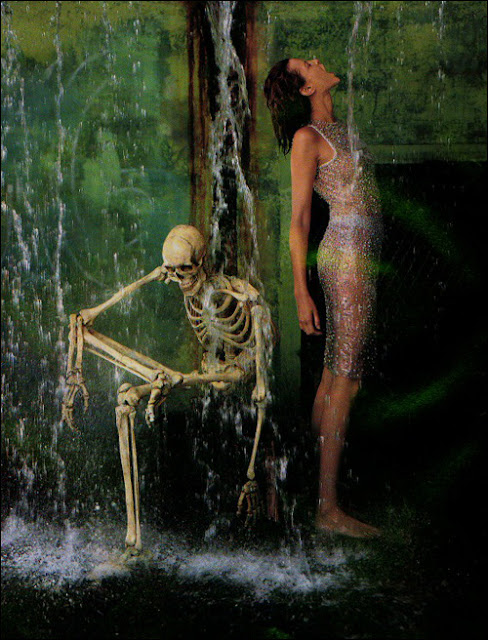
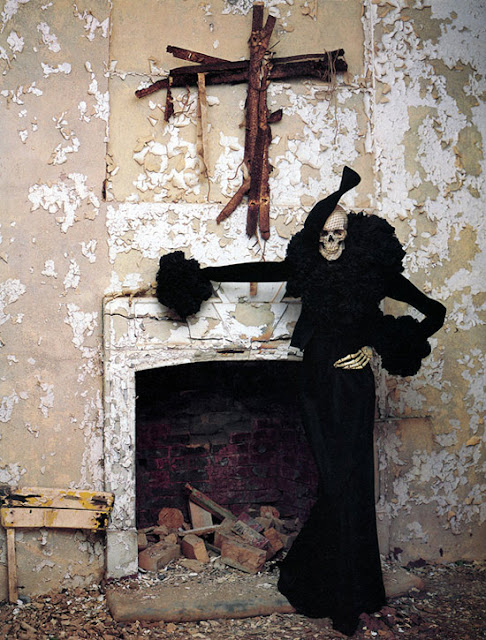
Richard Avedon, 1995
Credits
Written by Phoebe Cotterell @_phoebe_alice