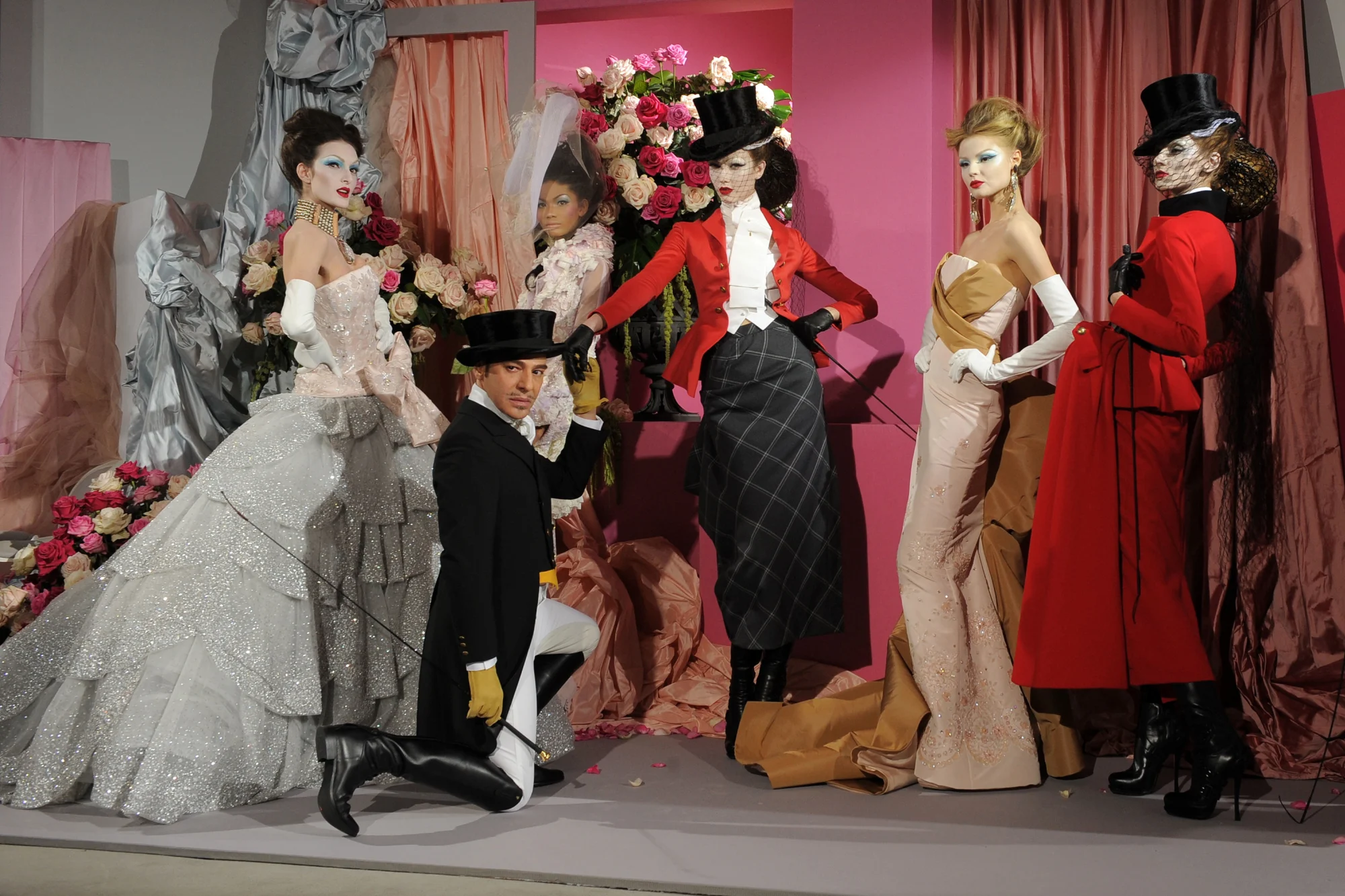
John Galliano
From Ruin to Radiance: John Galliano’s Sacred Return to Fashion
Once exiled from the altar of haute couture, John Galliano reemerges, humbled and transformed, at the helm of Maison Margiela. In this journey from Dior’s excess to Margiela’s introspection, the fallen icon finds redemption not in spectacle, but in silence and teaches us that even in disgrace, the soul of creation endures.

John Galliano’s story reads like a modern parable: that of a prodigal son of fashion, fallen in disgrace and then returned, humbled and transfigured. Juan Carlos Antonio Galliano Guillén was born November 28, 1960 in Gibraltar, to a Spanish father and an English mother. He was 6 when his family moved to London. In the Swinging London of the 60s, young Juan (nicknamed John) discovered the cultural richness of working-class neighborhoods, on Sundays, his mother dressed him as a Teddy boy, instilling in him early a taste for costume and spectacle. Gifted at drawing, Galliano entered Saint Martins in the 1980s. His 1984 graduate collection, inspired by the French Revolution and titled Les Incroyables, caused a sensation. Galliano’s theatrical talent exploded: he could tell stories through clothing, with lavish historical detail and already marked extravagance.
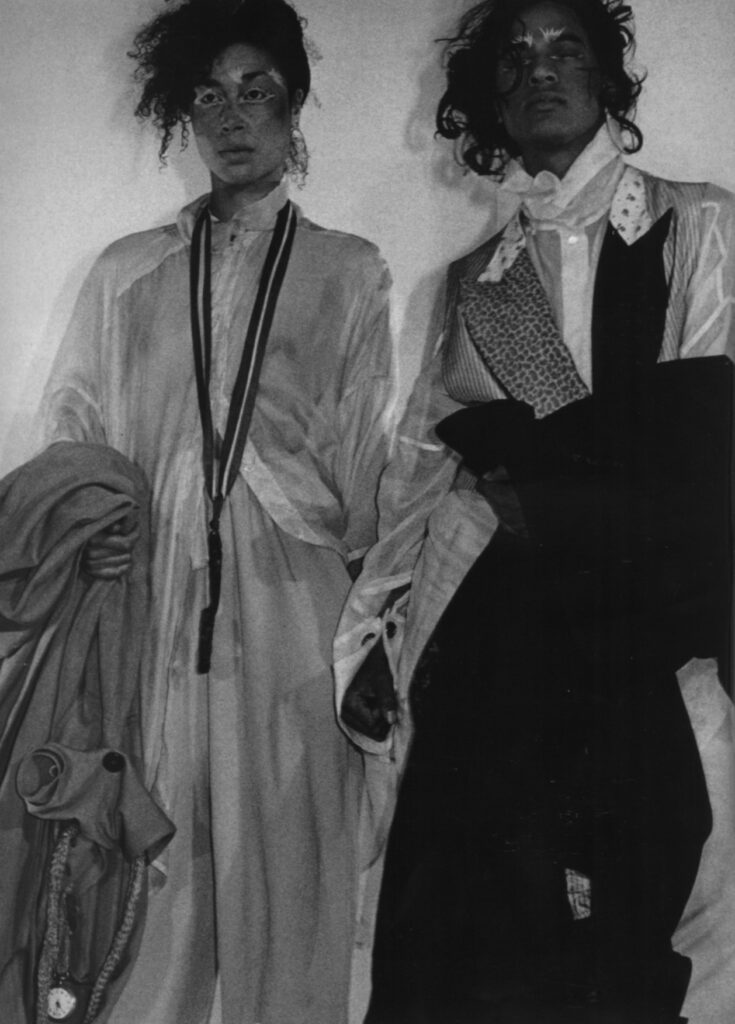
“Les incroyables”- John Galliano’s Graduate show CSM june 1984 London
Galliano launched his eponymous brand immediately after, buoyed by praise. But the beginnings were hard: in Thatcher’s austere London, his flamboyant style struggled to find funding. He went to Paris in the early ’90s, sometimes sleeping at friends’ places or almost on the street, but persevering out of passion. His perseverance paid off: in 1995, thanks to support from influential figures (like Vogue’s Anna Wintour and businessman Bernard Arnault), he was named creative director of Givenchy, becoming the first Brit to helm a French couture house. Galliano brought to Givenchy his sense of drama and opulence. One year later, in 1996, Arnault moved him to Christian Dior, the jewel of LVMH. There, Galliano would live his apogee.
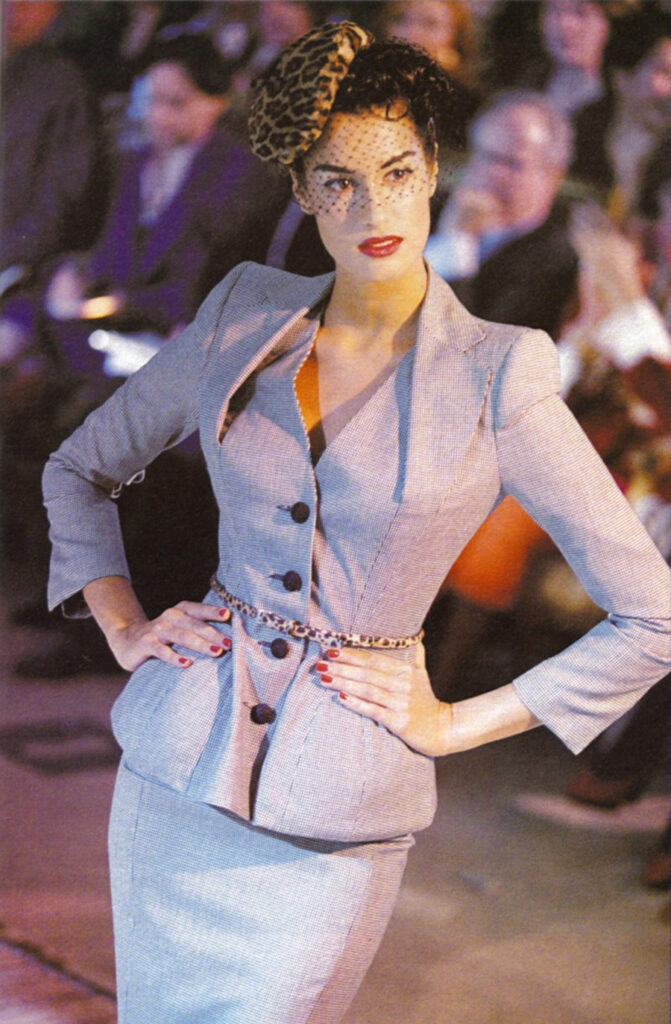
John Galliano – SS95
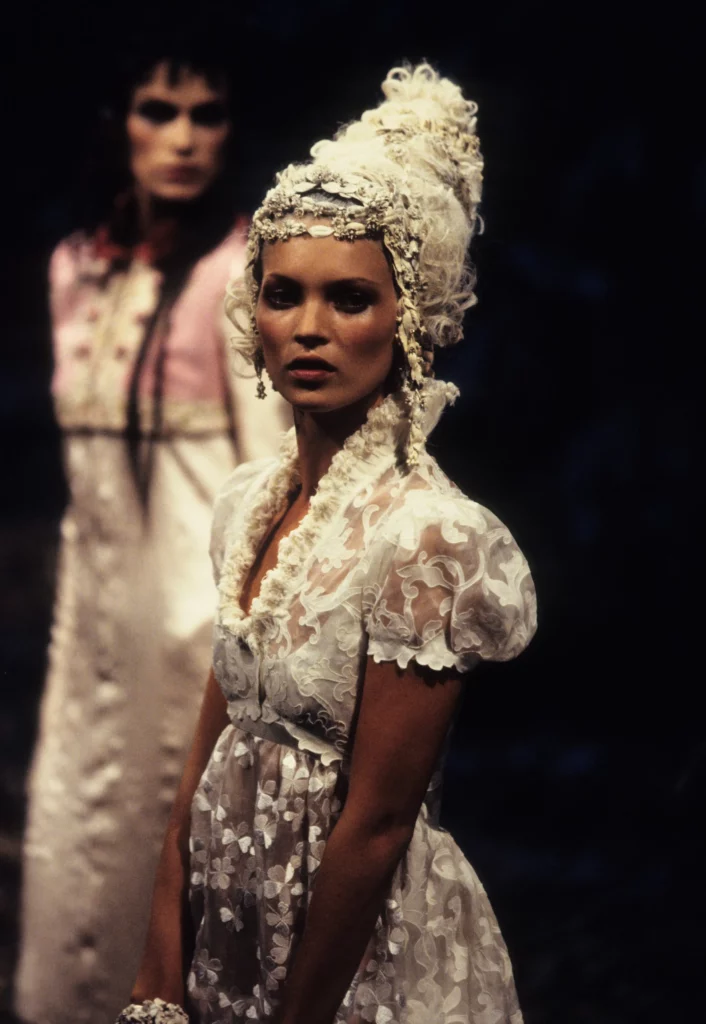
Kate Moss in Givenchy by John Galliano – FW96
For 15 years, from 1996 to 2011, John Galliano reigned at Dior like a comet of extravagance. His Dior shows were pure moments of magic and excess: he’d pose his models as 18th-century marquises in a Hall of Mirrors set; he turned a runway into a tropical jungle for a collection inspired by Gauguin; he brought in locomotives, acrobats, avalanches of flowers. Each season he explored a different theme, ancient Egypt, the roaring 20s of Paris, imperial Mongolia, London’s punk scene, and translated it into sumptuous clothing. Galliano is a storyteller: each collection a baroque tale. He mastered the bias cut (influence of Madeleine Vionnet) with virtuosity, creating sheath gowns that flowed on the body like water. He also knew how to deconstruct, mix, surprise: at Dior he modernized heritage by introducing streetwear touches, tattoo prints, skirts over trousers. Rich clients fought over his creations, the press lionized him. Galliano became a global star, himself dressing up as a flamboyant character at show finales (as a ship captain, an astronaut, Louis XIV, …).
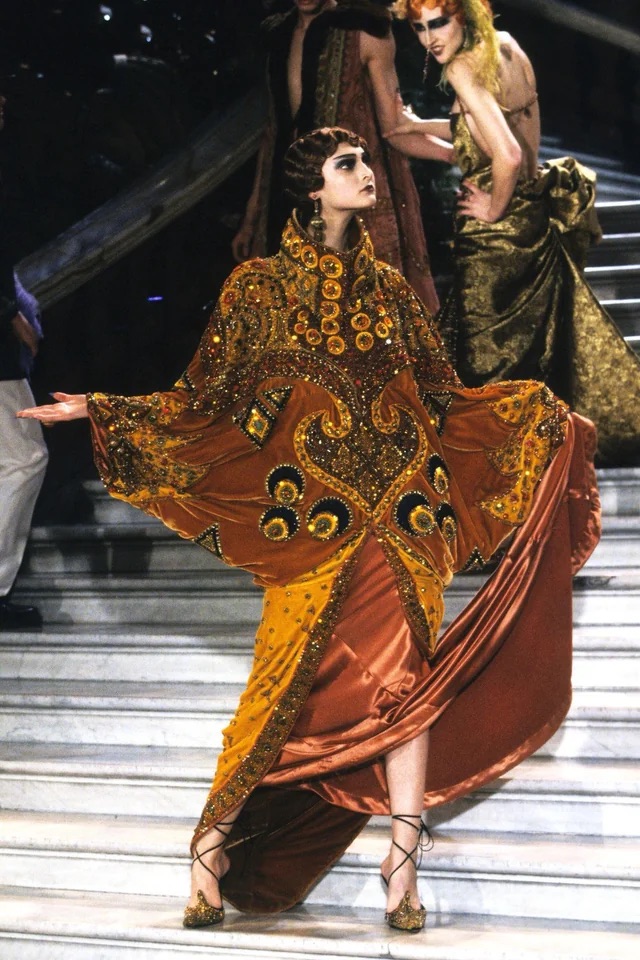
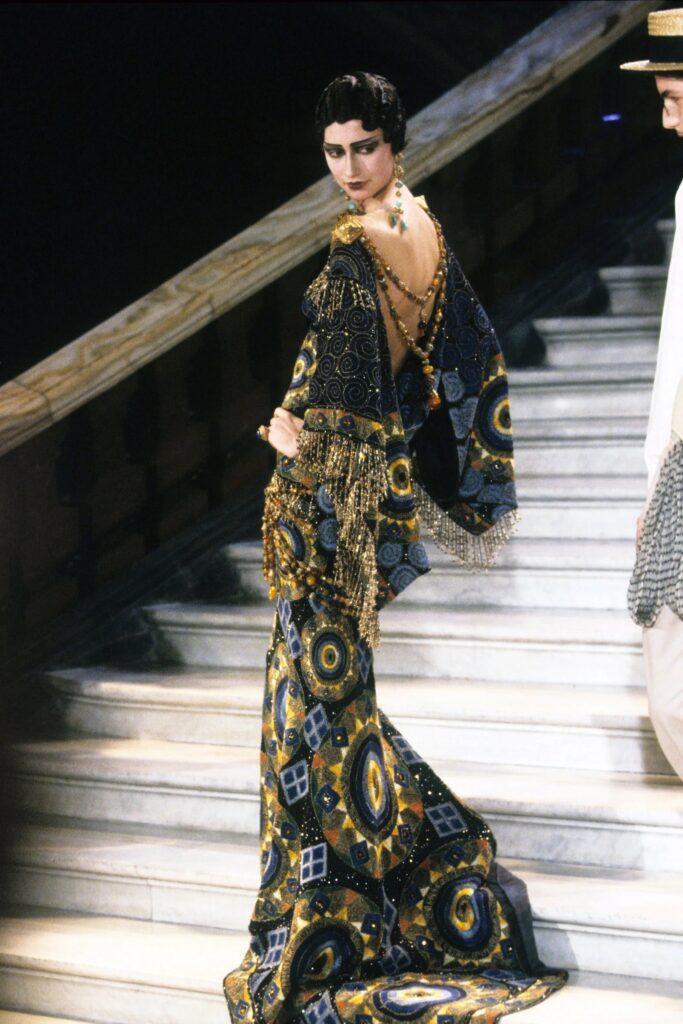
Christian Dior by John Galliano – SS98
But behind the euphoria lurked the sin of hubris. Exalted by success, Galliano lived like a rock star: nights of partying, excess of all kinds, secluded in a bubble of flattery. The pressure of churning out over ten collections a year (women’s prêt-à-porter and couture, men’s, his own label, etc.) exhausted him. To keep up, he abused alcohol and drugs. Slowly, the gentle man he was gave way to a darker version of himself. The drama erupted in February 2011: in a Paris café, drunk, Galliano hurled antisemitic insults at some patrons. The scene was filmed and caused instant scandal. Within days, the once-adored designer became a pariah: Dior fired him on the spot, and he was prosecuted (in France, anti-Semitic abuse is a crime). The trial revealed a contrite Galliano, gaunt and fresh out of rehab, expressing shame and apologizing publicly. The court showed leniency, giving him a symbolic sentence. But his reputation was shattered; no one wanted to touch the “toxic designer”.
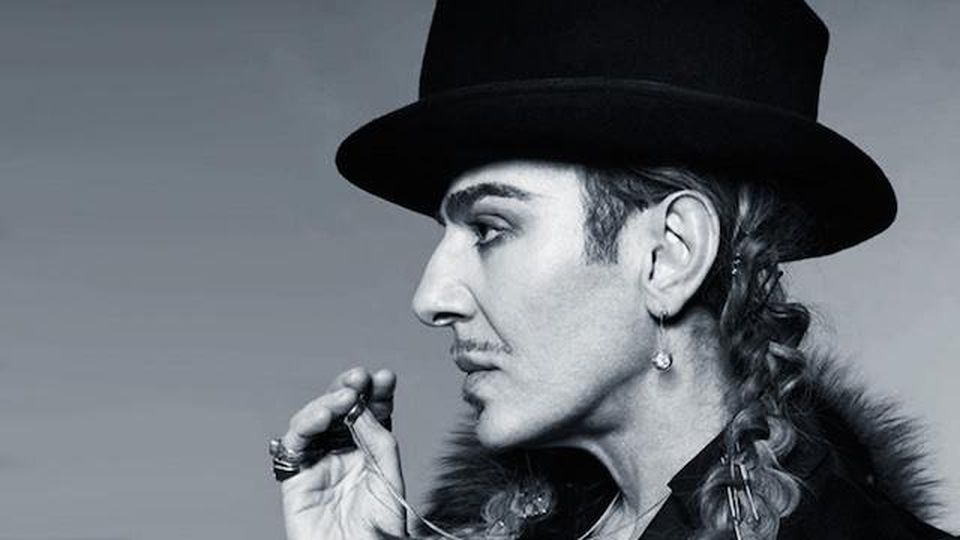
Thus began his journey through the wilderness, his way of the cross. Galliano disappeared from public view for a few years. He underwent therapy, rebuilt himself away from the spotlight. Gradually, some voices in the industry argued for his rehabilitation, citing his genius and the right to forgiveness after atonement. In 2013, he was invited for a few weeks at Oscar de la Renta’s in New York to help, a discreet test. Then in 2014, a bombshell: Maison Martin Margiela, the polar opposite of Galliano’s universe, announced it was hiring him as creative director. This was the act of redemption he had awaited. Galliano, the exuberant showman, took the helm of the invisible Margiela, seemingly a paradox. But it was precisely the space he needed to be reborn differently.
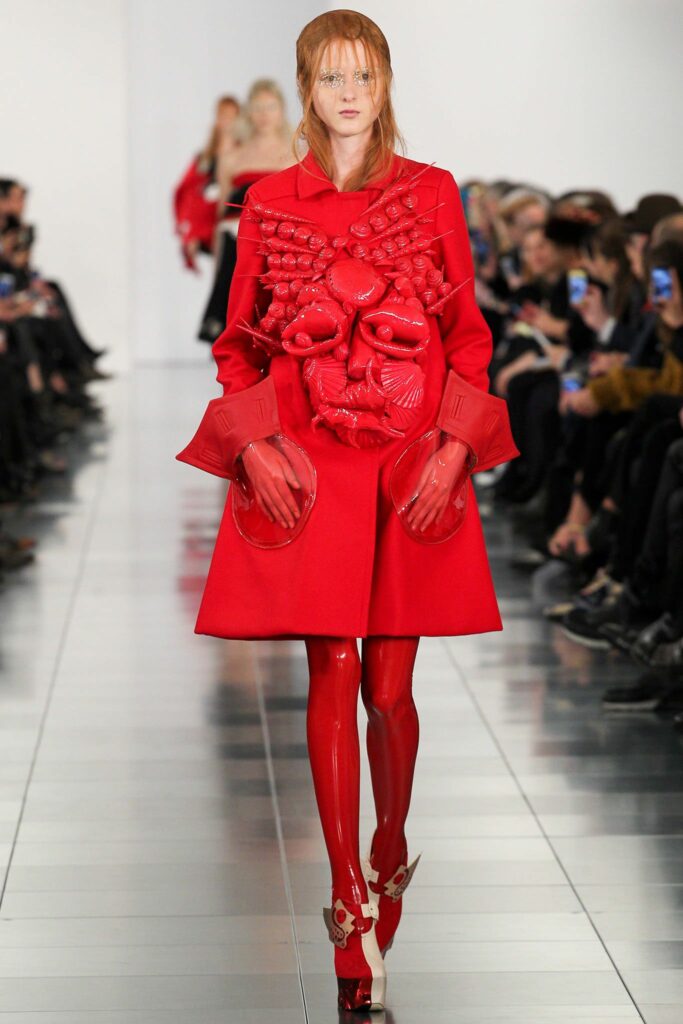
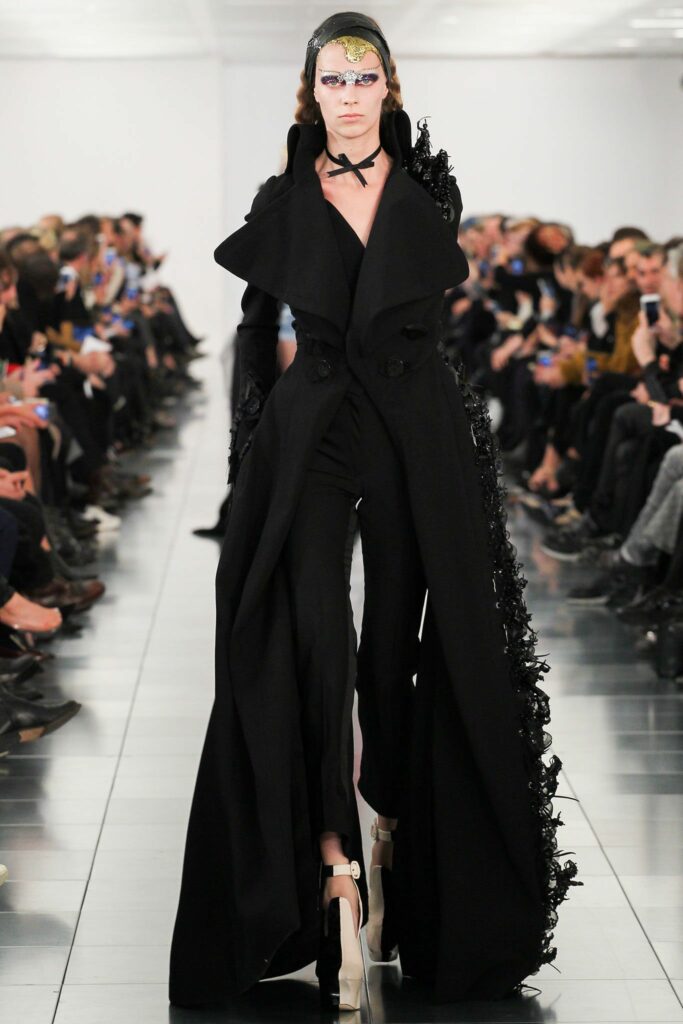
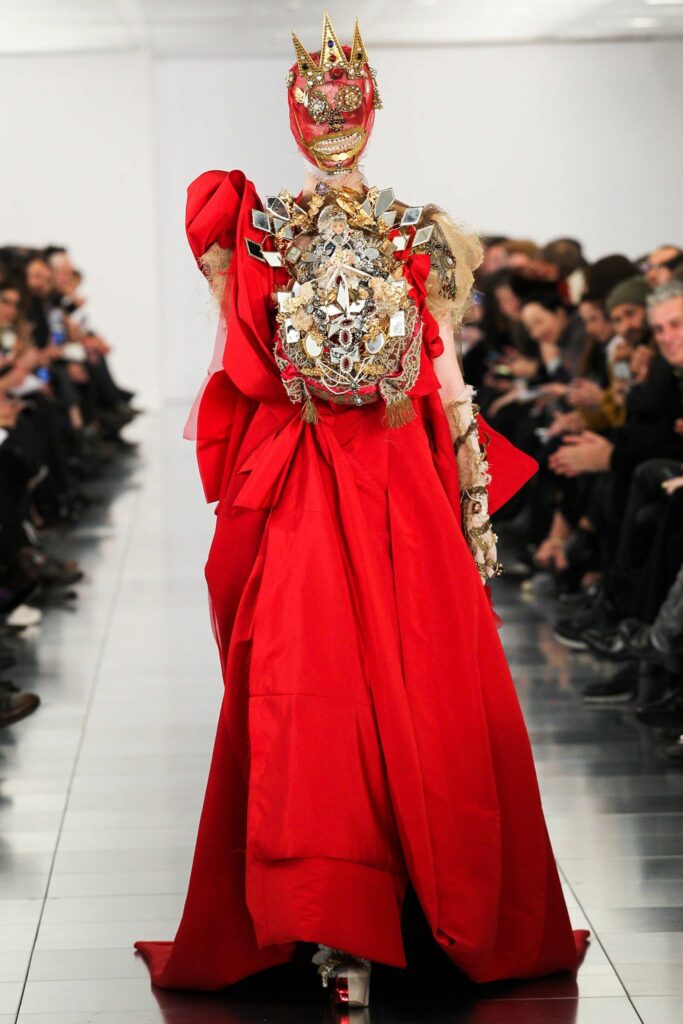
Margiela by John Galliano – SS15
Since 2015, John Galliano has rebuilt his name at Margiela with humility regained. There he creates sublime but more cerebral collections; he even adopts Margiela’s anonymity by wearing the blouse blanche lab coat for his bows. The man who once took extravagant final bows dressed as a matador or pharaoh now appears in a simple white coat, head bowed, for a brief thanks. This self-effacement signals his inner transformation. He has understood the vanity of glory, the necessity of balance and modesty. His creations have not suffered, on the contrary, they gained a new depth. Galliano at Margiela fuses his romanticism with conceptual avant-garde, delivering pieces that question clothing itself while being dreamily beautiful. Critics applaud his return to grace. By 2022, after a decade of rebuilding, Galliano seems at peace, recognized as a repentant phoenix of the fashion world.
The fundamental principle of this human saga is reconciliation, reconciliation of the artist with himself and with the industry he had disappointed. Galliano transformed his view of individuality by accepting his dark side and working to overcome it. His story shows one can fall from the highest peak to the deepest abyss, yet climb back to the light through contrition and determination. Creatively, it has given him maturity, even a new spiritual dimension: in his Margiela Artisanal shows, one senses commentary on the madness of the industry (for example, he did a collection around social media addiction, perhaps reflecting on his own past addictions and the media frenzy).
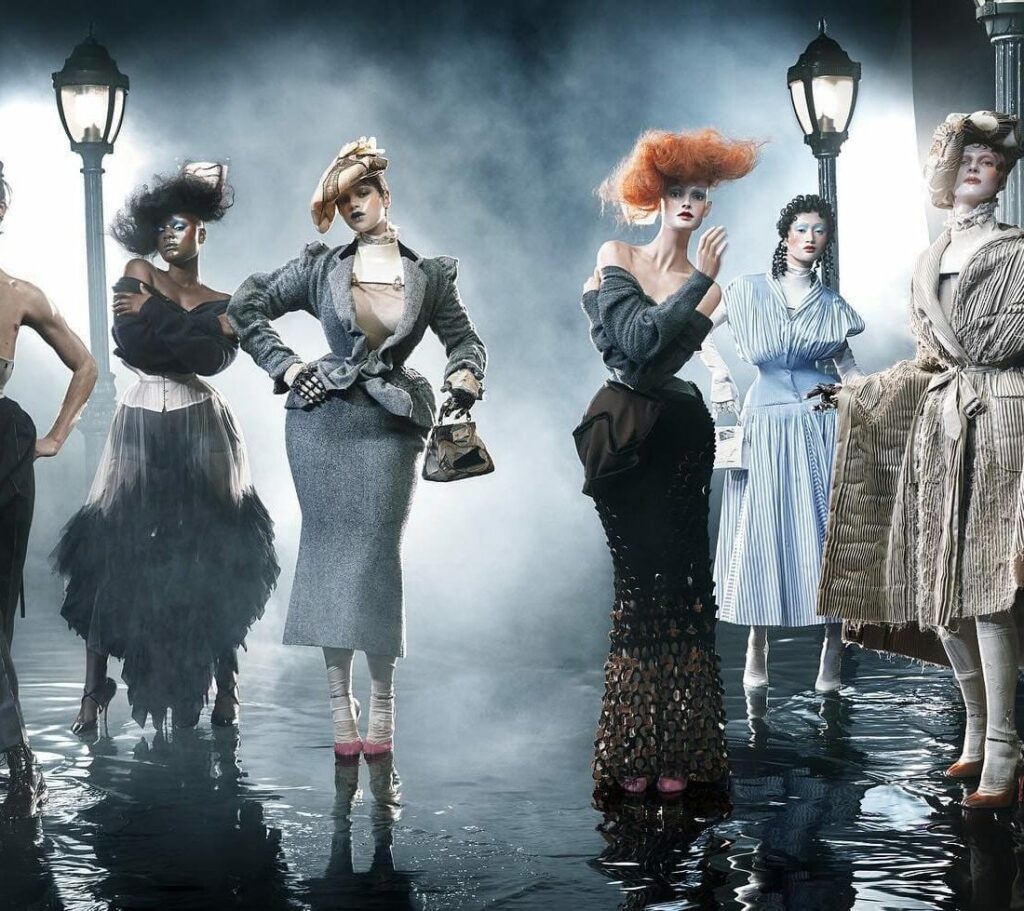
Margiela Artisanal Collection by John Galliano – 2024
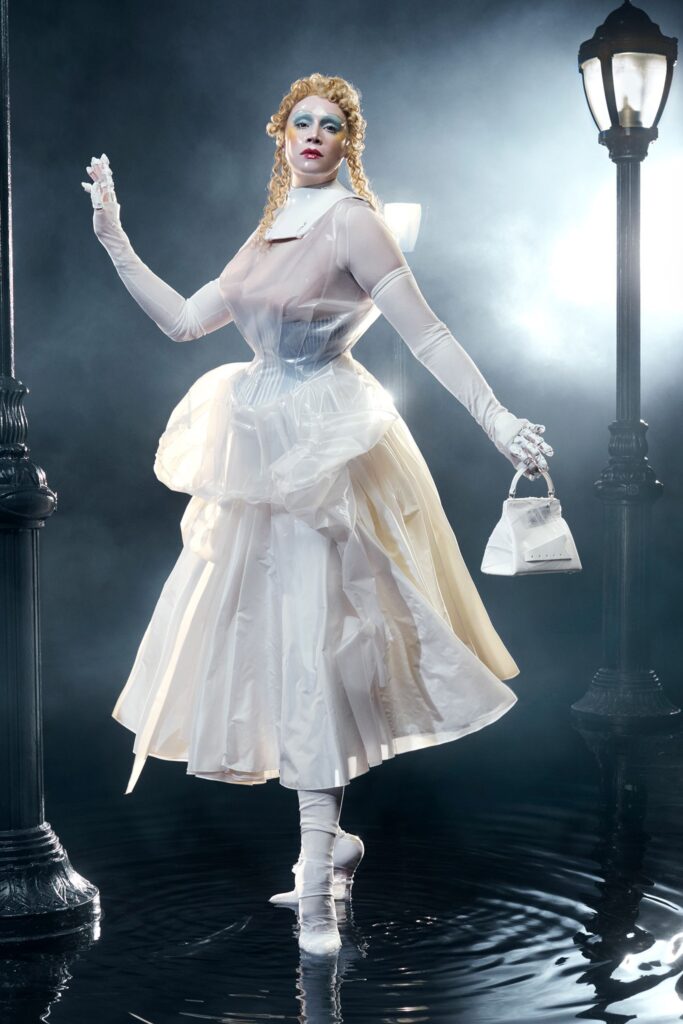
Gwendoline Christie in Margiela Artisanal Collection by John Galliano – 2024
Reflecting on the path of John Galliano, one is invited to consider grace and second chances. He teaches that creative genius does not immunize against error, and that error, however grave, can be redeemed through learning and sincere amends. His journey reminds us of the importance of humility: in his ascent, Galliano perhaps lost his footing; in his fall and rise, he found a kind of wisdom. For us, his experience is a mirror: we all have moments of straying or falling. What matters is to learn from them, to make amends, and to continue forward improved. Creatively, Galliano also inspires us never to lose our inner playful child, he kept his fertile imagination, while keeping an eye on our ego. Everyone deserves redemption if they sincerely seek it. Galliano achieved his through his art, reinventing himself without denying his talent. May we, in our way, find the strength to get up from our failings, ask forgiveness if need be, and put our creativity or energy at the service of a higher version of ourselves. Thus the fallen creator became again a creator of dreams, and thus can each of us, from the depths of error, find our way back to our own light.
“I now understand that silence is powerful.” (Galliano, 2015)