Rick Owens
From the depths of California’s sunlit shadows, a god of darkness rose. Rick Owens does not design, he consecrates. His silhouettes descend like sacred relics, his runways unfold as liturgies of chaos, where the beautiful and the brutal kneel side by side in worship of a new divinity: the Owens aesthetic.

In the dimness of a California basement, a black flame was lit in the 1960s. Richard Saturnino Owens, known to the world as Rick Owens, was born on November 18, 1962 in the small town of Porterville, California. Nothing seemed to predestine this son of a modest family to become fashion’s sovereign of shadows. And yet, under the sunny American sky, he gravitated early toward darkness and the underground: fascinated by punk, the decadent glamour of Hollywood, and the hammering pulse of heavy metal, he forged his aesthetic personality far from the mainstream. After being expelled from Otis College for copying classical nudes, he learned pattern-making at Los Angeles Trade-Technical College and survived the 1980s by sewing knock-offs of big-name designers, dissecting fashion’s anatomy stitch by stitch.
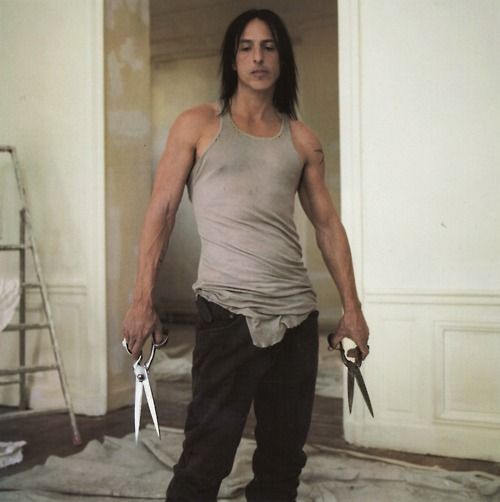
Rick Owens in the early 2000’s photo published in “The early years 1994-2002 From Hollywood Boulevard to New York Fashion Week” in A Glass for OVERDUE magazine (2020)
During that same era he met Michèle Lamy, a magnetic, eccentric force of L.A. nightlife, who became his partner, muse, and anchor. She pulled him out of drifting habits and addictions, and redirected him firmly toward creation.
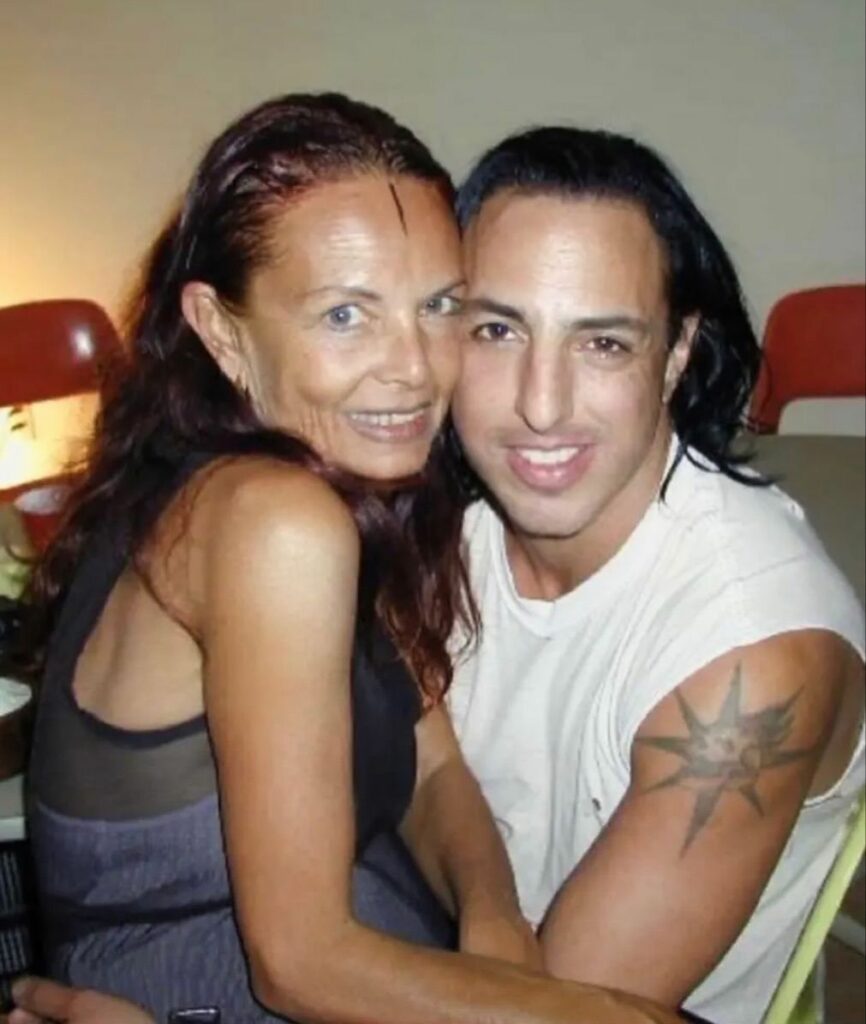
Young Michèle Lamy and Rick Owens
In 1994, amid Los Angeles’ alternative ferment, Rick Owens launched his own brand. His first pieces were sold in a niche avant-garde boutique, attracting a cult of devotees who sensed the emergence of something radically new. Owens proposed a wardrobe both somber and audacious: leather jackets aged like relics, twisted drapery, t-shirts ripped and layered with monastic severity, silhouettes at once austere and sensual. It was grunge elevated to couture, chaos rendered architectural. For a few years, his realm lived in secrecy at fashion’s periphery, until fate intervened. In 2001, a photograph of Kate Moss wearing one of his jackets appeared in Vogue Paris. Suddenly, the world’s gaze shifted.
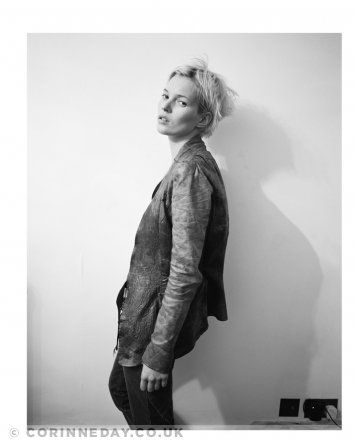
Kate in Owens, Vogue 2001 – the spark that lit the cult.
The following year, encouraged by Anna Wintour, Rick Owens presented his first runway show in New York. What unfolded was not merely a collection but a ritual: thundering music, stark lighting, and clothes like post-apocalyptic armor. By his second season, he launched menswear and received the CFDA’s award for Best New Talent in 2002.
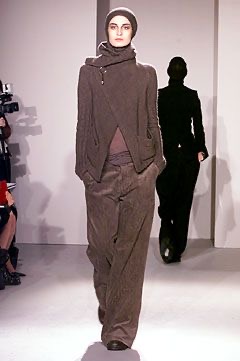
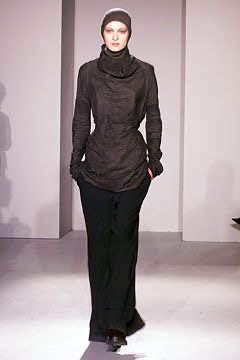
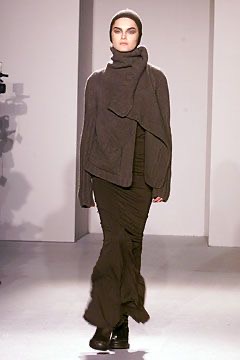
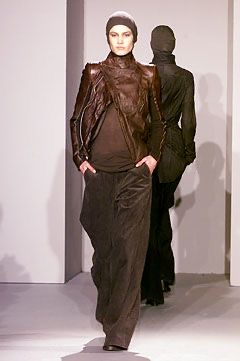
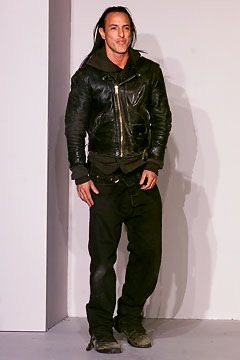
Rick Owens – FW02
In 2003, like a gothic conqueror, Rick Owens transplanted his nascent empire to Paris, the promised land for visionary creators. He established Owenscorp in a former convent in the 7th arrondissement. An ideal sanctuary for this dark monk of fashion. Paris embraced him as the heir to a raw avant-garde lineage: after the Japanese of the 1980s and the Belgian conceptualists of the 1990s, Owens brought a new dimension, a celebration of darkness and the carnal, an alloy of minimalism and barbaric glamour. In 2004, on the tenth anniversary of his brand, he published a book ironically titled L’ai-je bien descendu ? (“Did I descend well?”), borrowing a line from Mistinguett and revealing his dry, self-aware humor. That same year, he opened his first boutique under the arcades of Palais-Royal, a lair where his full universe – fashion, furniture, art – converged. He expanded through parallel lines: Lilies, a fluid and youthful approach; DRKSHDW, his black-toned streetwear and denim; even an unexpected line of luxury furs. The Owens aesthetic crystallized: an anti-luxury luxury, a fierce elegance fusing aristocratic silhouettes and industrial grit.
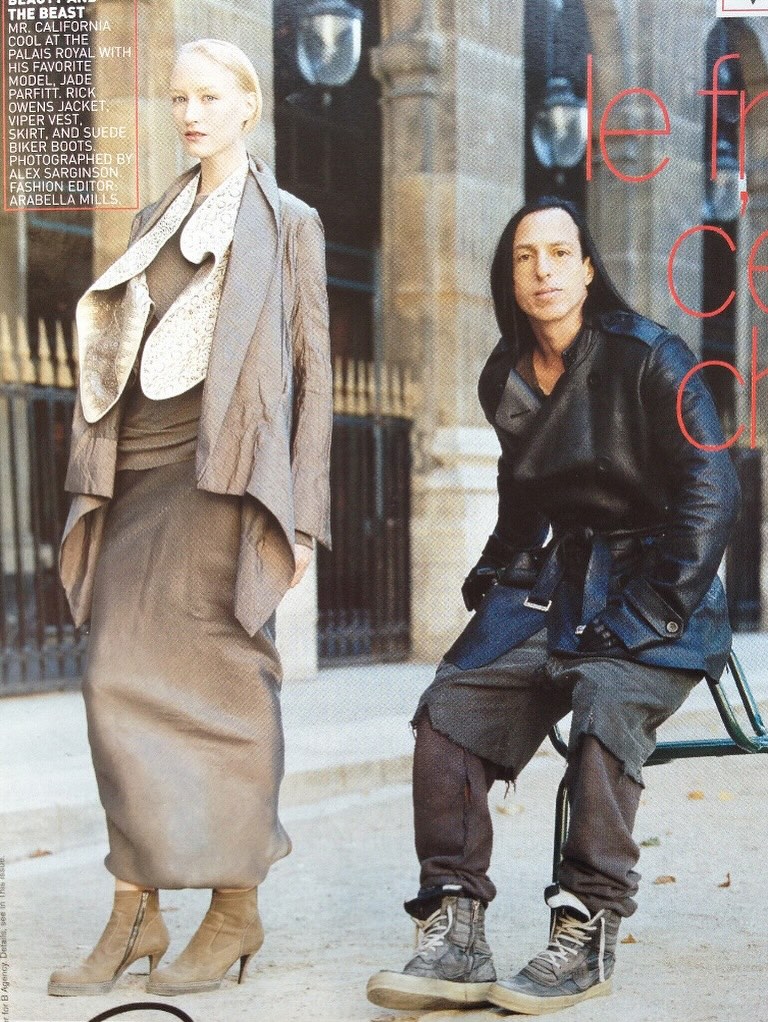
Rick Owens in Palais-Royal, early 2000’s
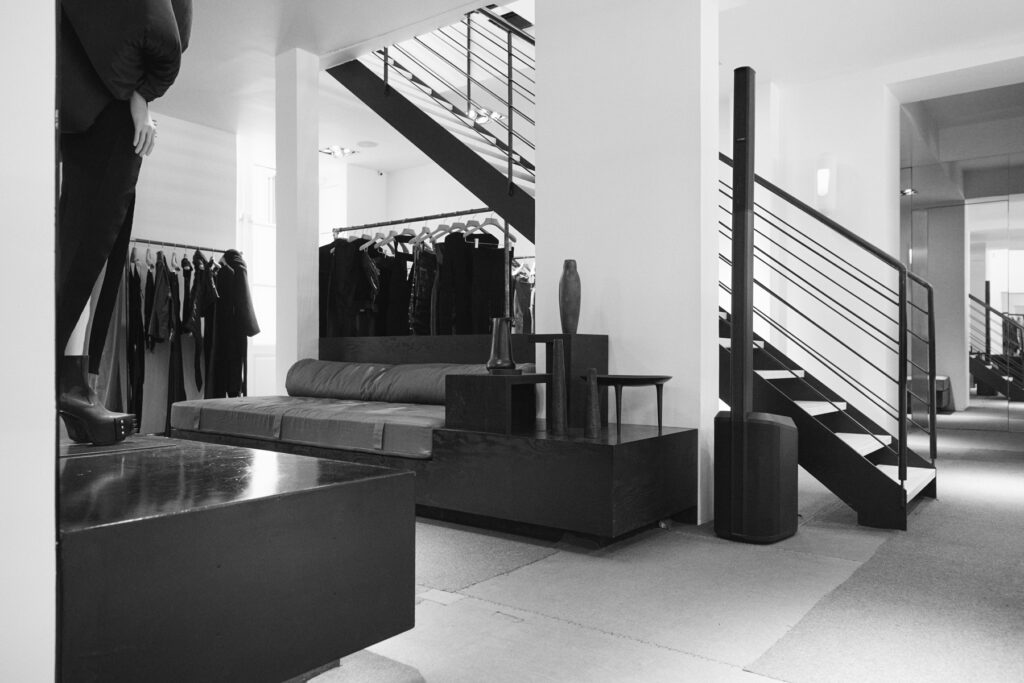
Rick Owens shop in Palais Royal
Rick Owens’ renown owes as much to his clothing as to his runway shows : true pagan ceremonies at the heart of fashion week. “People know that coming to my shows, they will witness something strong, theatrical, an emotional story,” he once said. Each presentation was a total artwork, a confrontation between beauty and disturbance. He chose unconventional venues – basements, warehouses, public plazas – and orchestrated a calculated chaos: pallid lights, blinding strobes, soundtracks oscillating between punk, metal, and deep electronic drones, models marching with a warrior’s stride. Owens loved to jolt his audience and rupture fashion’s decorum. In 2013, instead of traditional models, he sent down the runway a troupe of African-American step dancers who performed a violent, joyous, chest-beating choreography. It was an electric, defiant celebration of non-traditional beauty. “It was like a big ‘Fuck you’ to conventional beauty. Their message is: we are beautiful in our own way,” he said proudly. It became one of the most powerful runway moments of the decade.
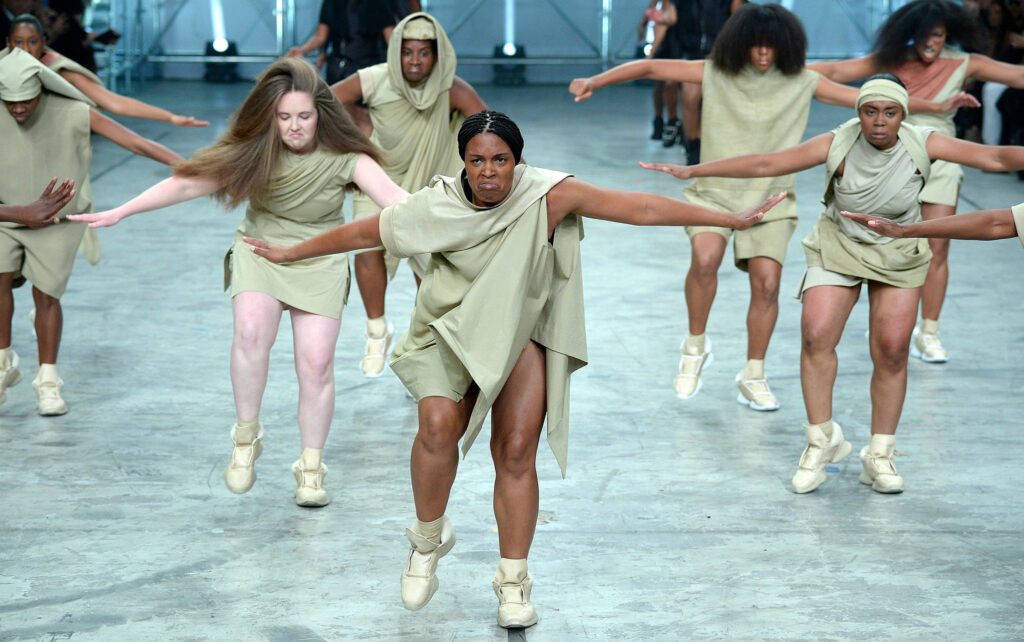
Rick Owens – SS14
But Owens did not stop there. In 2015, during a menswear show, he caused a sensation by briefly revealing male models without underwear, exposing what is usually concealed and shattering yet another taboo. The press jokingly nicknamed him “Dick Owens,” and reacted with the predictable mix of shock and fascination. Owens shrugged, arguing that prudishness was the true indecency.
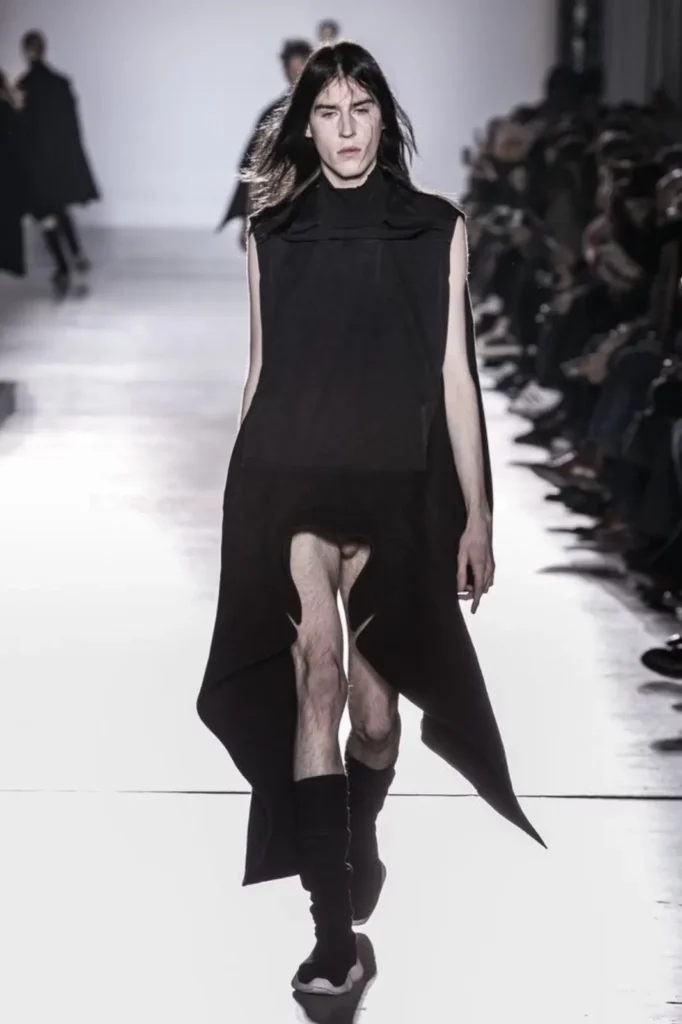
Rick Owens – FW15 Sphinx Tunic Dress
This taste for controlled chaos peaked again in 2016 when one of his models stormed the runway carrying a banner calling for Angela Merkel’s death : an unauthorized stunt that infuriated Owens, who physically expelled him backstage. Ironically, the collection explored themes of male aggression; he experienced that violence firsthand. Yet none of this dented his aura. If anything, these incidents contributed to his living mythology. His style, often labeled “apocalyptic chic,” redefined individuality on the runway. He embraced unconventional bodies, blurred gender boundaries, celebrated both strength and vulnerability, and transformed clothing into spiritual armor.
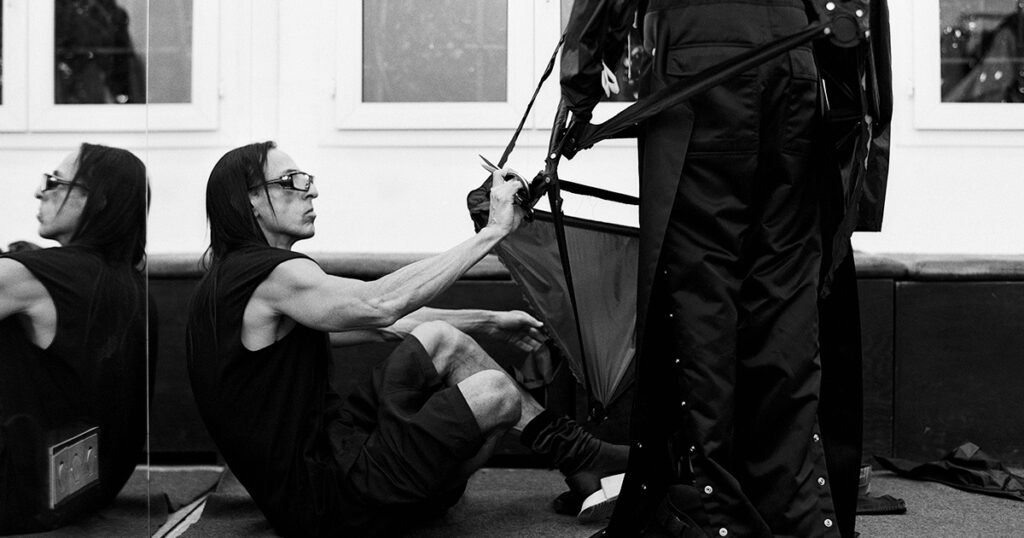
Rick Owens – 2023
The fundamental principle of avant-garde according to Owens could be summed up as liberating transgression. By pushing aesthetic, cultural, and social boundaries, he opened a new space where identity becomes fluid and personal truth becomes sovereign. He transformed the fear of darkness into fascination, inviting his contemporaries to embrace their shadow side. His influence on contemporary fashion is profound: “the Owens aesthetic” now defines a universe of dusty tones, monastic drapery, asymmetry, and sculptural silhouettes that permeate countless designers. But beyond fashion, his impact is philosophical: he challenges our relationship to the body, gender, and beauty itself.
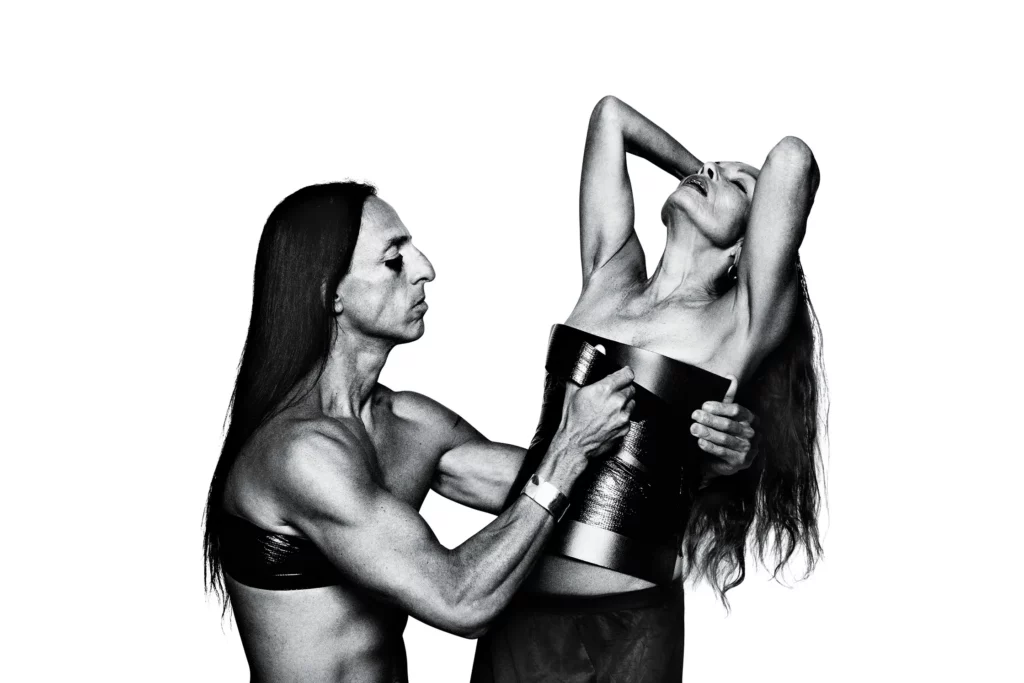
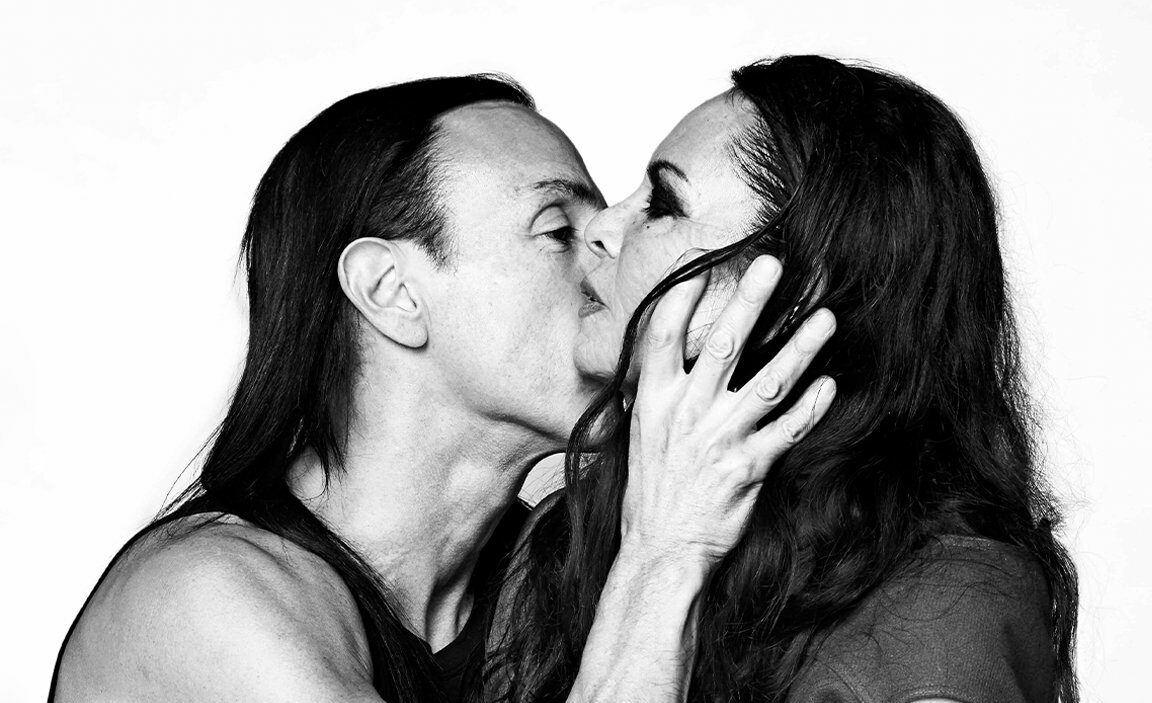
Rick Owens and Michèle Lamy, 2013, Photographed by Danielle Levitt
Reflecting on Rick Owens’ path, we learn the courage to embrace the chaos within. He teaches that our shadows, far from being denied, can become a source of creative power. Daring one’s strangeness rather than repressing it may be the path to truth, one of the deepest messages of his work. In our lives, often confined by conformity, drawing inspiration from Owens could mean refusing to fear difference, transforming inner rebellion into artistic gesture, however small. His example invites us to stage our lives as total works of art, without worrying about the crowd’s judgment, as long as the story is sincere and strong. Not everyone is meant to shock or provoke, of course. But each of us can push the limits of our own world. Whether through clothing, thought, or lifestyle, taking risks and stepping outside the comfort zone may bring us closer to our true selves. In this, Rick Owens – through his annual rites of chaos – offers a lesson in furious freedom and raw sincerity. May his boldness inspire us to embrace our inner contrasts and inhabit the theatre of our existence without fear.