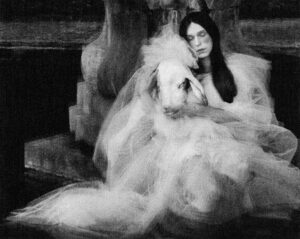
The influences of subcultures in Rick Owens’ art
Rick Owens draws from the shadows of musical subcultures, transforming their raw energy into a sculptural aesthetic. His work carries the spirit of underground movements, rebellious, ritualistic, and imbued with a dark romanticism. These influences do more than just inspire him; they form the backbone of his language. So what are they?
The punk and hardcore punk attitude
A self-confessed fan of Iggy Pop, Owens has always maintained a taste for provocation and subversion in his work, a sort of punk attitude in itself. Raised in California, Rick Owens was a teenager and then a young adult when bands from the area like Middle Class or Black Flag were creating a new subgenre of punk rock, faster and more aggressive: hardcore. In an i-D video interview, Owens said he used to mosh (the violent dance of this music) and frequented the Vallé and the Star Light clubs.
“I did slam dance… I got fucked up too. I still have a scar on my nose ’cause I got hit in the nose with somebody’s boot.”
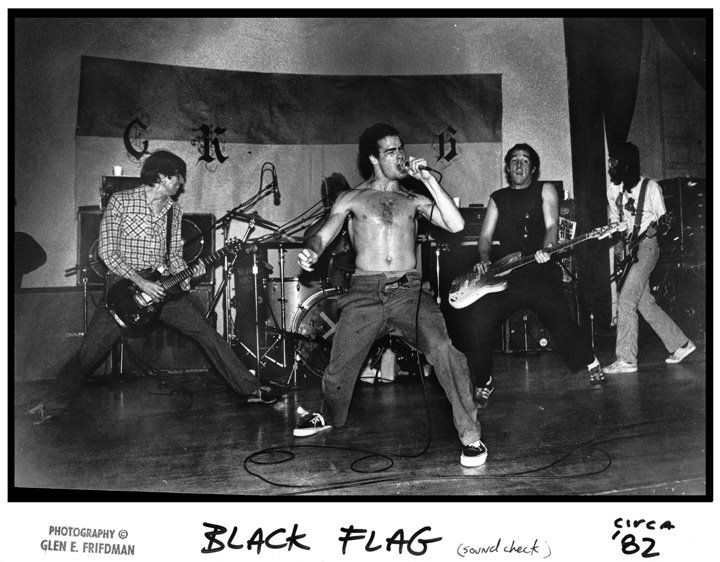
Black Flag taken by Glen E Friedman around 1982
The fashion of hardcore bands was beginning to distinguish itself from the look of English ’77 punk bands, which was considered too arty or poseur. A more casual and virile look appeared: simple T-shirts, work clothes, combat boots, or skate shoes progressively replaced the shaggy and dishevelled punk look.
In the same interview, he confessed, talking about the Doc Martens he wore in his youth, that they represented a “masculine vitality”: “Guys flying through the air (slam-dancing) with those boots, with the smell of piss and beer, which made it even more exciting ’cause there was a lot of homoeroticism there.”
The raw, utilitarian spirit of hardcore directly influenced Owens’ approach to cuts and silhouettes. His early leather jackets, for example, reflected the practical toughness of punk clothing: short but thick, aggressively fitted, and devoid of decorative excess. This attitude of functional brutality is also evident in his consistent use of monochrome palettes and worn textures.
The post-punk and gothic aesthetic
One of the most obvious influences on Owens’ work is his reappropriation of the dark punk aesthetics that evolved into the gothic subculture in the early 1980s. The exhibition at the Palais Galliera dedicated to him was also an opportunity to pay tribute, in two ways, to a cult goth band: The Sisters of Mercy. Firstly, the name of the band is used as the title of the work of the three nun statues that welcome visitors. Secondly, the name of the exhibition is taken from a hit by the group, Temple of Love.
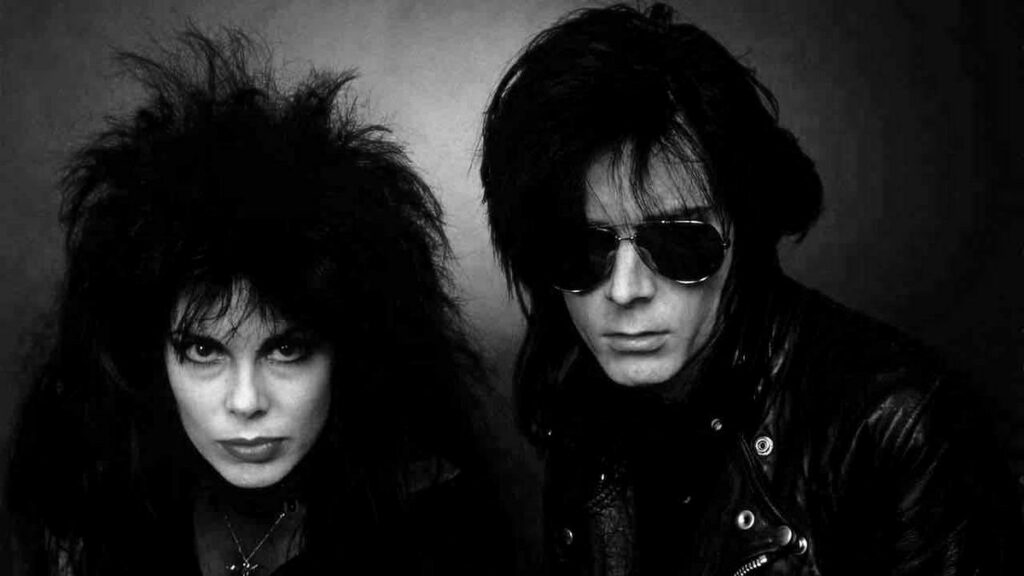
Sisters Of Mercy – Patricia Morrison And Andrew Eldritch
During an interview with W magazine, he said that he used the song “Light” by the band during one of his fashion shows because it had meant a lot to him. Like many dark bands of this era, Owens has expressed his love for decadent, dark romanticism themes and German Expressionism.
The gothic heritage profoundly influenced Owens’ signature long, flowing silhouettes and his fascination with drapery. His coats, often floor-length, sharp-shouldered, and monastic, carry the theatrical solemnity of goth fashion. The androgyny of post-punk also shaped his approach to genderless forms: narrow hips, elongated torsos, and shrouded silhouettes that blur masculine and feminine.
The impact of industrial scenes
Despite the lack of direct references on the subject, the style developed in the 1990s by the designer is clearly an extension of looks worn by EBM, industrial, or industrial rock bands at the end of the 1980s. For example, the Belgian band Front 242 was one of the first, maybe the first, to impose black bomber jackets and circular black sunglasses in a new, radically dark military fashion style.
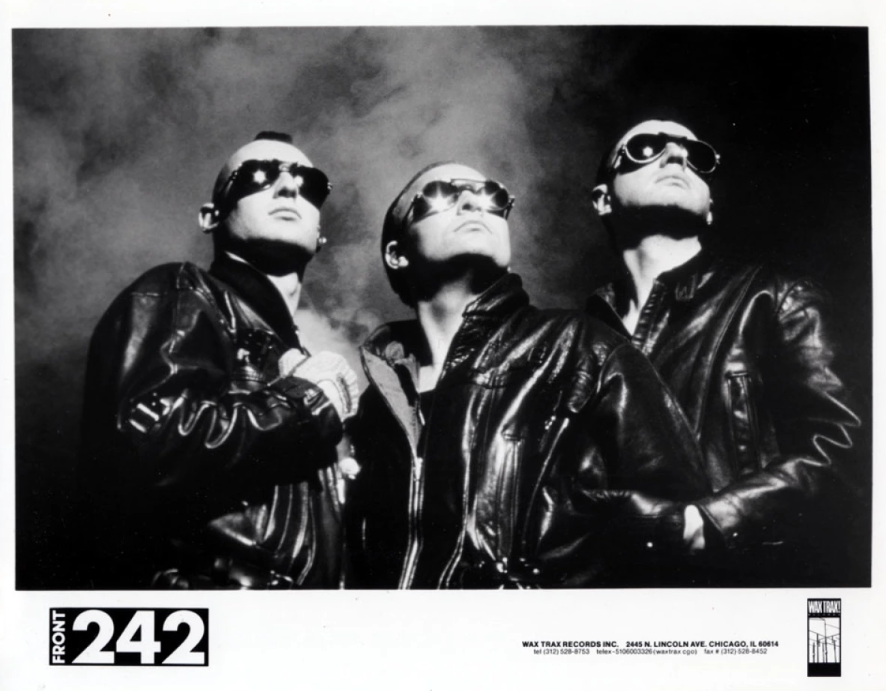
Front 242 – Wax Trax records
Other bands like Ministry, Skinny Puppy, or Nine Inch Nails developed entire universes at the crossroads of BDSM, punk and goth elements, and post-apocalyptic aesthetics. Given the explosion and popularity of this music in the alternative clubs of Los Angeles or Chicago, it is undeniable that these groups left their mark on Owens’ imagination. Looking at the promotional photos of these bands and their outfits is somewhat like looking at a sketch of Rick Owens’ style, especially for Nine Inch Nails, whose numerous fans now notably wear Rick Owens.
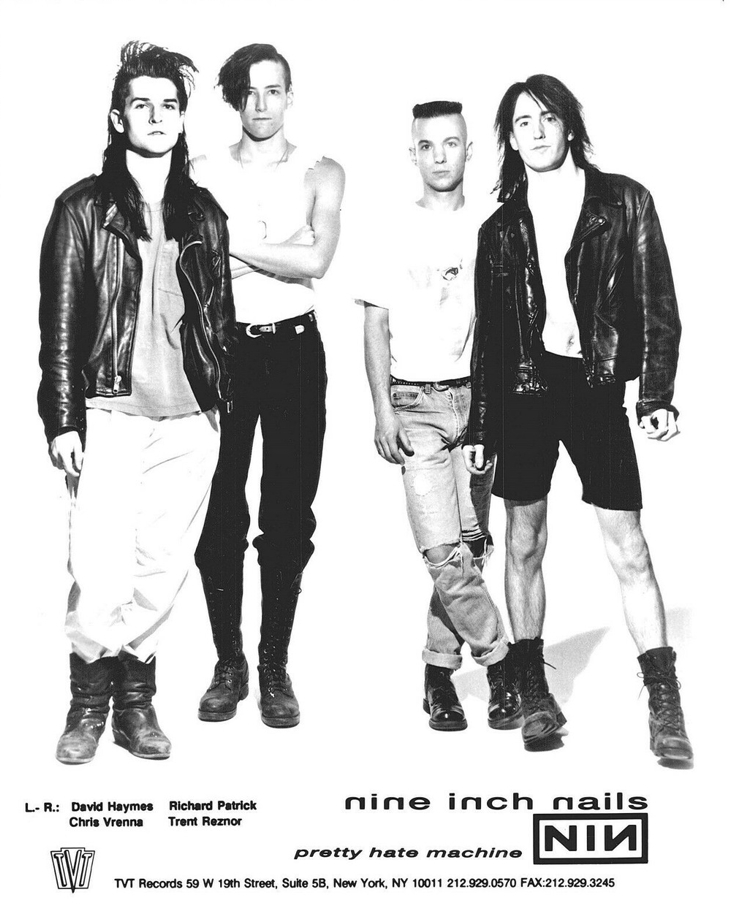
Nine Inch Nails, New York, 1989
Industrial culture seems to have pushed Owens toward a minimalist and futuristic style with strong, almost military shapes. His use of heavy fabrics, rubbery textures, structured bomber jackets, and BDSM elements reflects the look of industrial groups of the era. Many aesthetic elements of industrial scenes were later reused in techno and its hardest branches (hardcore techno, gabber, rave), music styles that he has always said he loved listening to, especially at the gym.
Owens has been distilling elements of subculture into his art for decades, both brutalist and poetic. By reshaping the rawness of punk, the romantic melancholy of goth, and the dystopian side of industrial, he stands among those who demonstrate how subcultural elements can seamlessly fit into the world of fashion.
Credit
Romain Vo