How 15th-Century German Mercenaries Became Avant-Garde Icons
Centuries before punk or avant-garde existed, German mercenaries were already slashing fabric, clashing colours, and defying social codes. The Landsknechts of the 15th century turned rebellion into style, and their fearless self-expression still echoes across today’s runways.
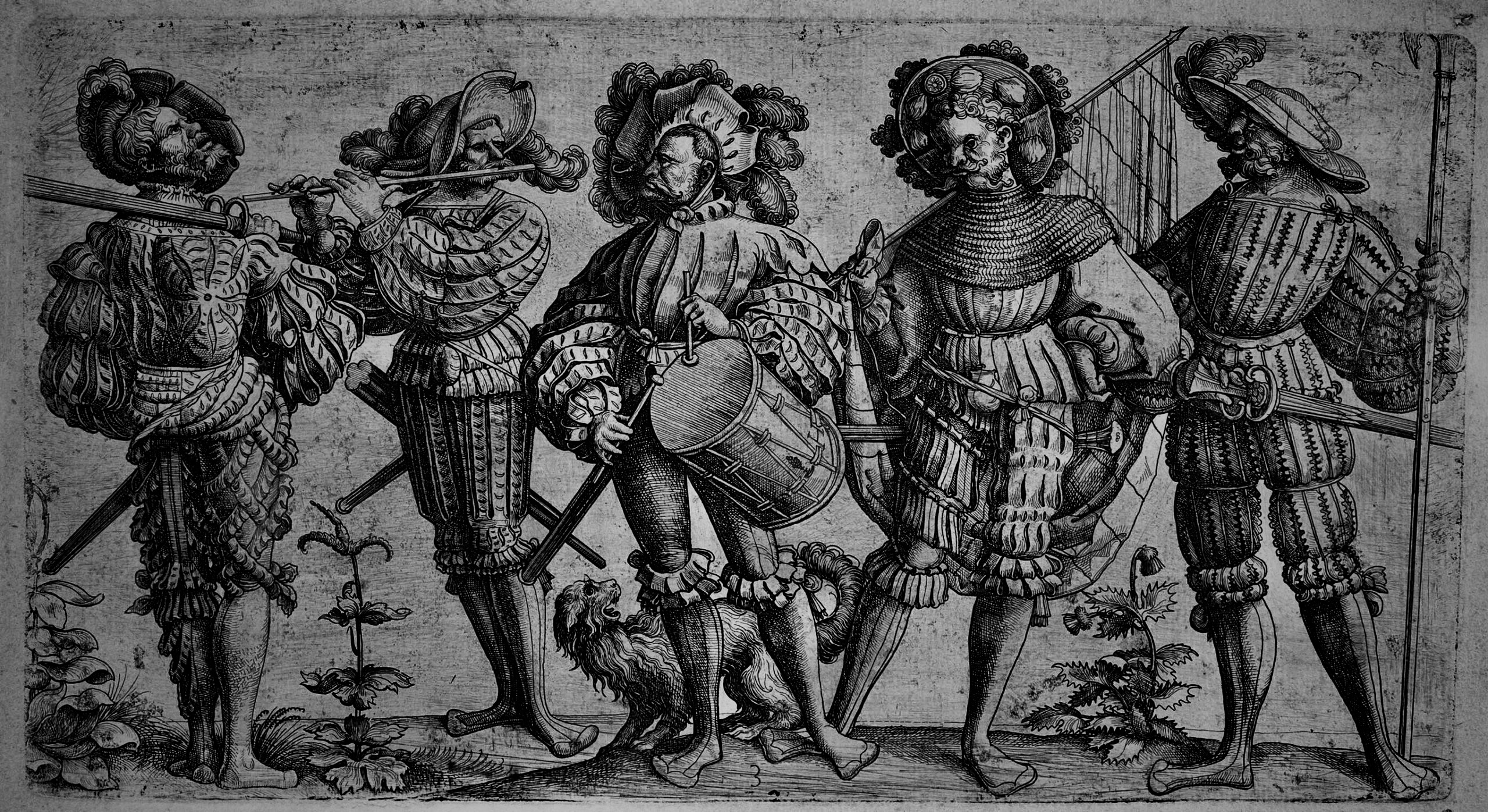
In the 15th and 16th centuries, German mercenaries, also known as Landsknechts, wore bold and bright clothing with exaggerated sleeves, feathered hats, and clashing patterns. They often scavenged fabric from wounded and fallen soldiers. With no uniforms, each soldier was responsible for his own styling. Combining fabrics like steel and silk and mismatching colours was a way for the mercenaries to show pride and rebel against the traditional outfitting of the time. It is often reported that the better dressed the Landsknecht, the higher the payment he received.
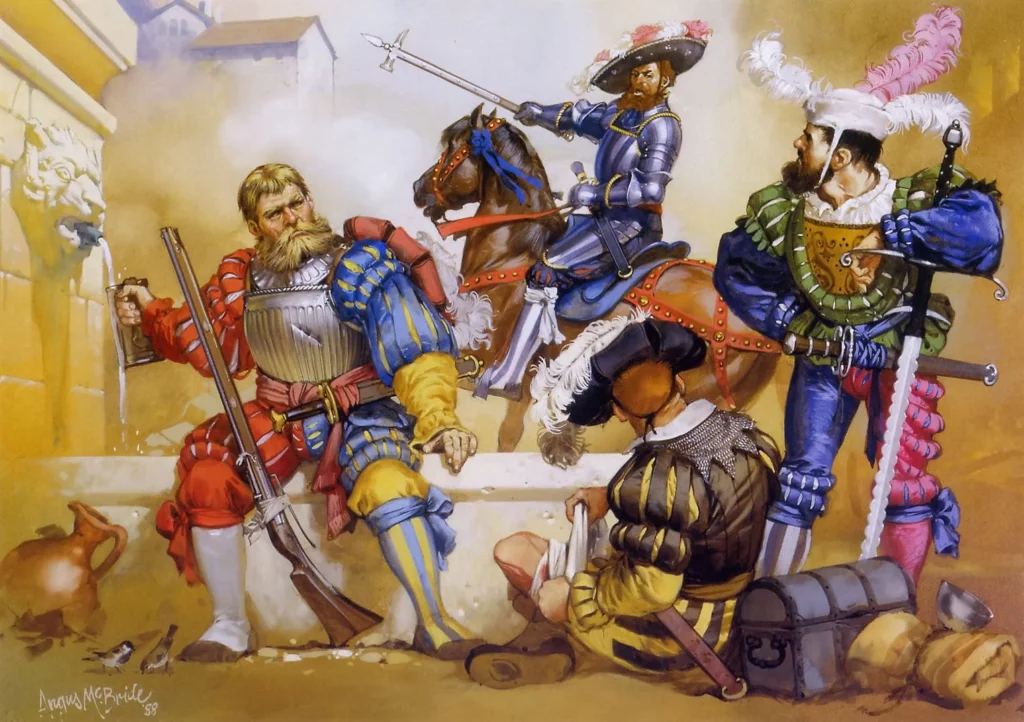
Landsknechts during the Livonian War by Angus McBride
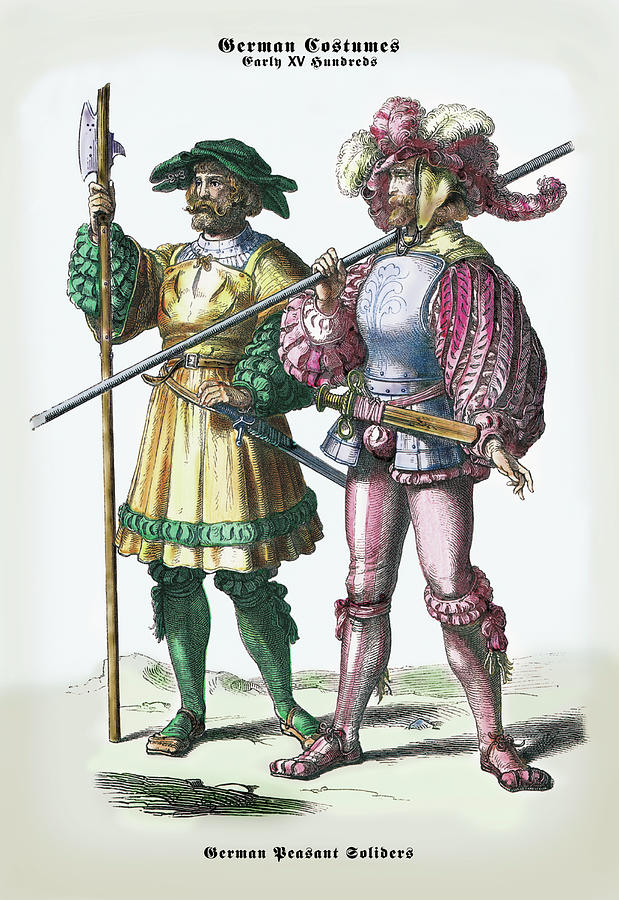
German Peasant Soldiers by Elvey Which
Holy Roman Emperor Maximilian formed the Landsknecht company in 1487 and, in 1503, exempted them from the laws dictating the style of each social class. He urged them to wear distinctively outlandish garb, explaining that the lives of Landsknechts tended to be “brutish and short.” Indeed, it was rare to encounter an elderly mercenary.
Those who joined came from diverse social backgrounds, including nobles, peasants, and criminals. Their reasons ranged from financial necessity to a desire for adventure. They built up a powerful reputation and fought in conflicts across Europe until their status began to wane in the mid-16th century. Their flamboyant outfits became a way to flaunt both identity and power. Exempt from sumptuary laws that restricted food and clothing purchases, Landsknechts freely indulged in extravagance. Silk was particularly favoured because its fibres did not get stuck in wounds like linen or cotton, reducing the risk of infection. They were also thrifty, scavenging fabrics from the battlefield. This practice explains the slashes and cuts in their outfits and their embrace of mismatched colours and patterns.
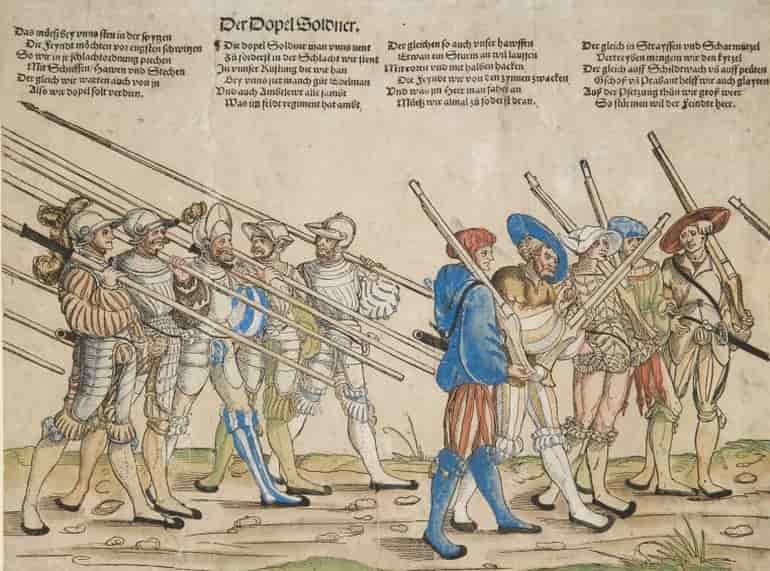
Heereszug der Landsknechte by Erhard Schön
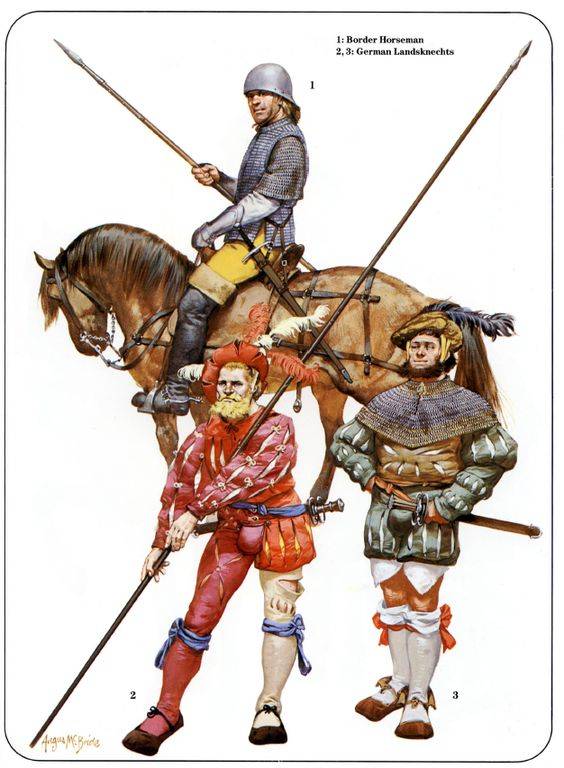
German mercenaries in the service of King Henry VIII of England by Angus McBride
As fashion is cyclical, it is unsurprising to see Landsknecht style return to the runway. The 1960s fused space-age aesthetics with a medieval revival, with bell sleeves, peasant blouses, and empire waists becoming popular. Paco Rabanne’s introduction of metallics and chainmail in 1966 has been repeatedly revisited, most recently in the brand’s Spring/Summer 2024 collection of fringed hooded dresses and tops that look straight out of a medieval closet. Chainmail hoods and shawls, once worn by mercenaries for extra protection and sparkle, found their modern equivalent in this futuristic collection.
At the Autumn/Winter Denzil Patrick show, Daniel Gayle and James Bosley reimagined the Landsknecht for today, presenting bold red silks, thick knits with plaited rope details, silver chestplates, and shield-shaped bags. The warlike silhouettes were balanced with mud-splashed trousers and brocade patterns, creating an effect reminiscent of a medieval victory parade.
Di Petsa, known for her wet-look gowns, drew inspiration from medieval knights with ornate silver chestpieces, pearl-encrusted swords, and delicate chainmail across her Autumn/Winter 2025 collection. Young brand Giovanna Flores echoed the mercenaries’ bright outfitting with bold draping, clashing prints, shocking red tights, and combinations of tight-fitting bodices with billowing sleeves and skirts. Uma Wang showcased checkerboard patterns, a favourite of Landsknechts and medieval knights alike, and sent out a velvet suit in mossy tones with exaggerated ballooning sleeves.
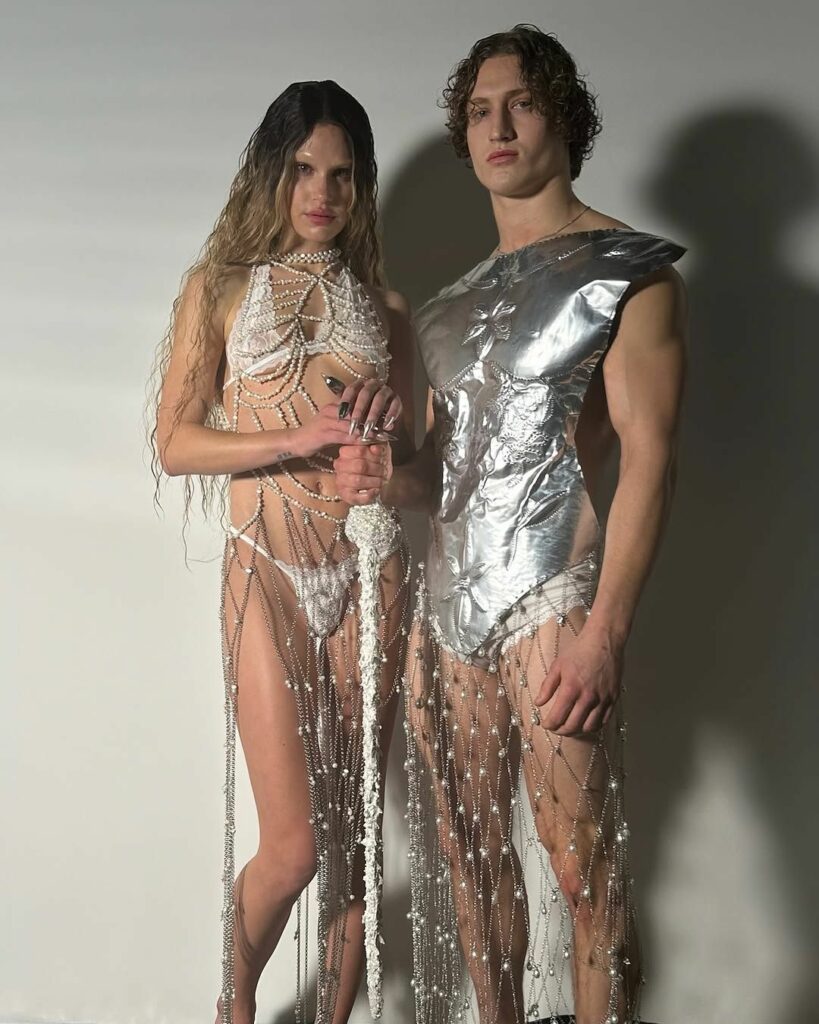
Di Petsa, “Knights in Shining Armor”, FW25
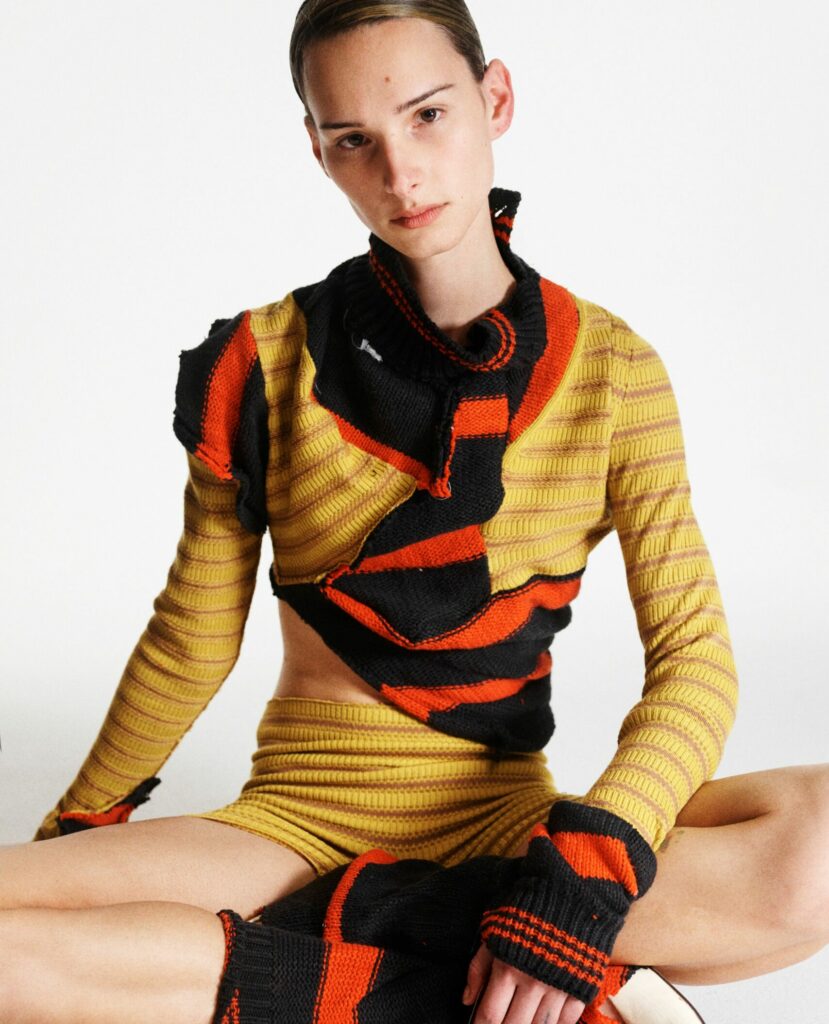
Giovanna Flores FW25
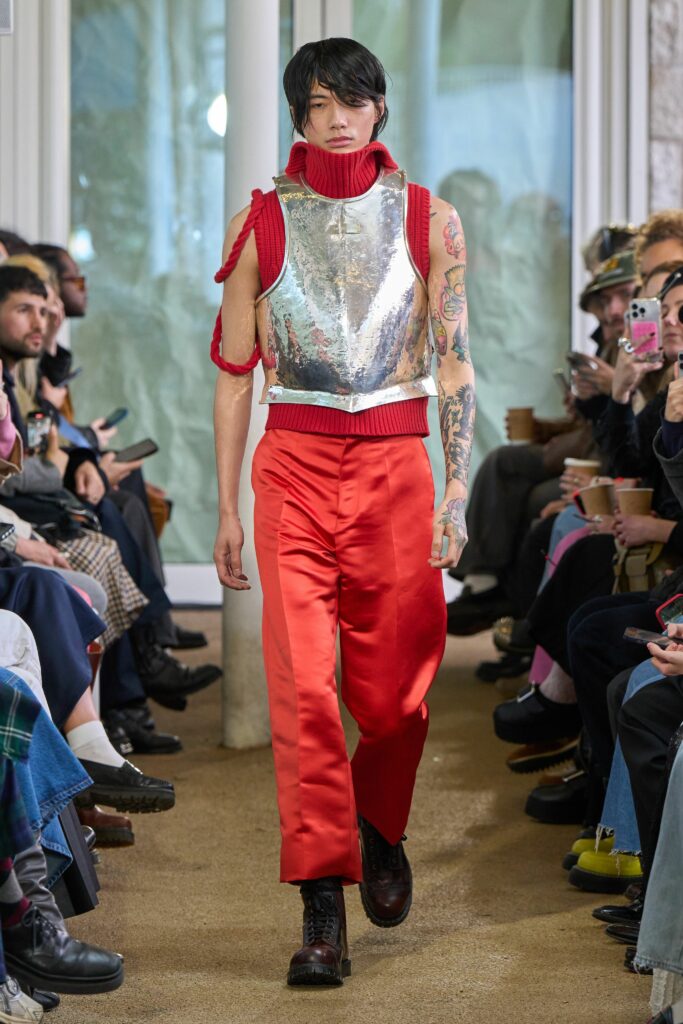
Denzil Patrick FW25
Once you notice the historical referencing, it becomes hard to miss. Even Vaquera’s Autumn/Winter 2025 collection, with puffball mini skirts, satin jackets, squashed leather baker-boy hats, and sheer tights, mirrored mercenary silhouettes. Perhaps this resurgence speaks to our era of political unrest and uncertainty, where a knight in shining armour feels appealing. The puffball and bloomer trend, embraced by Chopova Lowena, Jacquemus, and Shushu/Tong in 2024, can easily be traced back to mercenary attire.
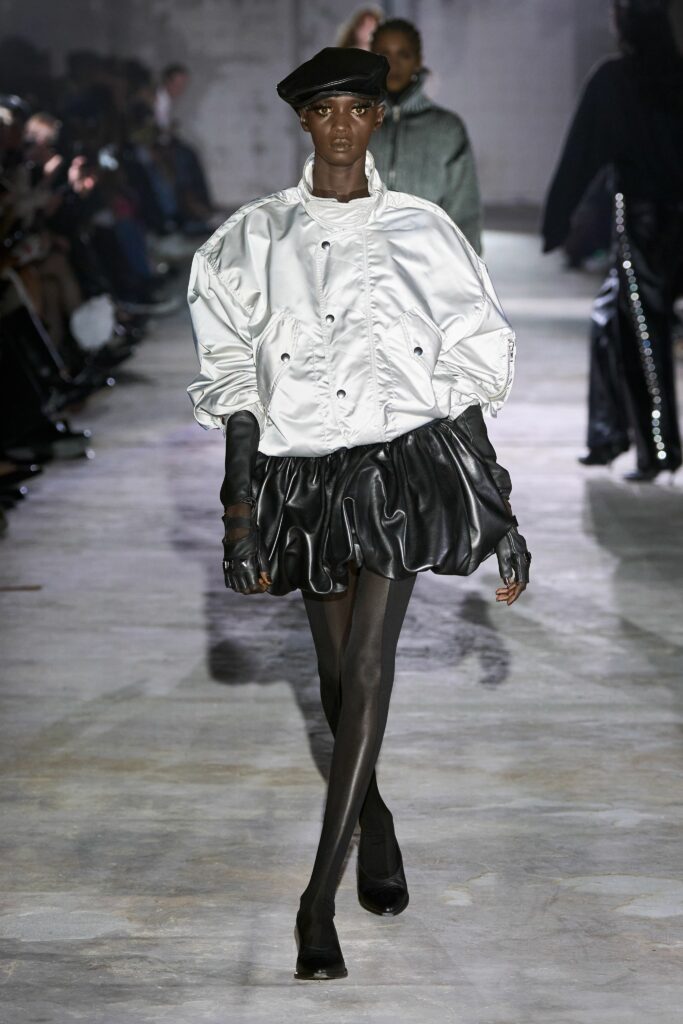
Vaquera, FW25
Designers’ turn to medieval influences may also stem from a disillusionment with the present. In 2023, the French health agency Santé Publique France reported that 13.35% of people aged 18 to 75 experienced a depressive episode in 2021, up 36% from 2017. Meanwhile, the Varkey Foundation found that 37% of young people globally believe the world is getting worse. In such a climate, romanticising history becomes appealing. The Landsknechts embody independence, boldness, and confidence—qualities that feel distant for many today. With youth unemployment in the EU at 14.8% in May 2025, the yearning for mythical self-expression is understandable.
Fashion, oversaturated by social media and fast-moving cycles, may now look further back for inspiration. The Landsknecht provide fertile ground for this, offering designers and consumers alike the chance to indulge in fantasy. After all, so many childhood tales of good triumphing over evil feature knights, rogues, and flamboyant costumes. Once again, men in tights and checkerboard patterns become symbols not of warfare but of imagination.
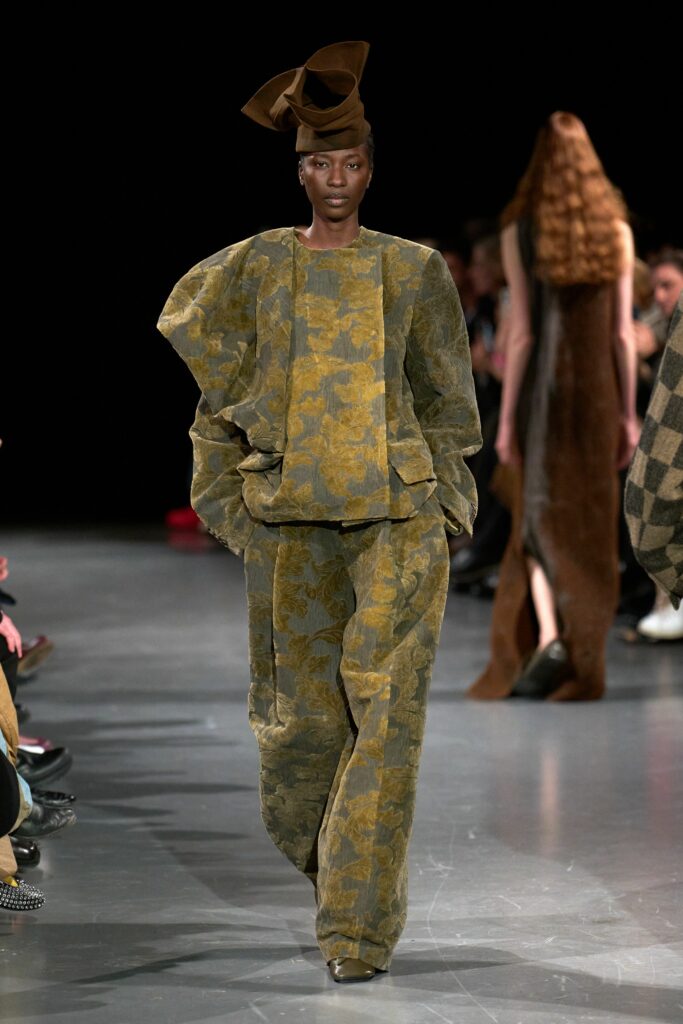
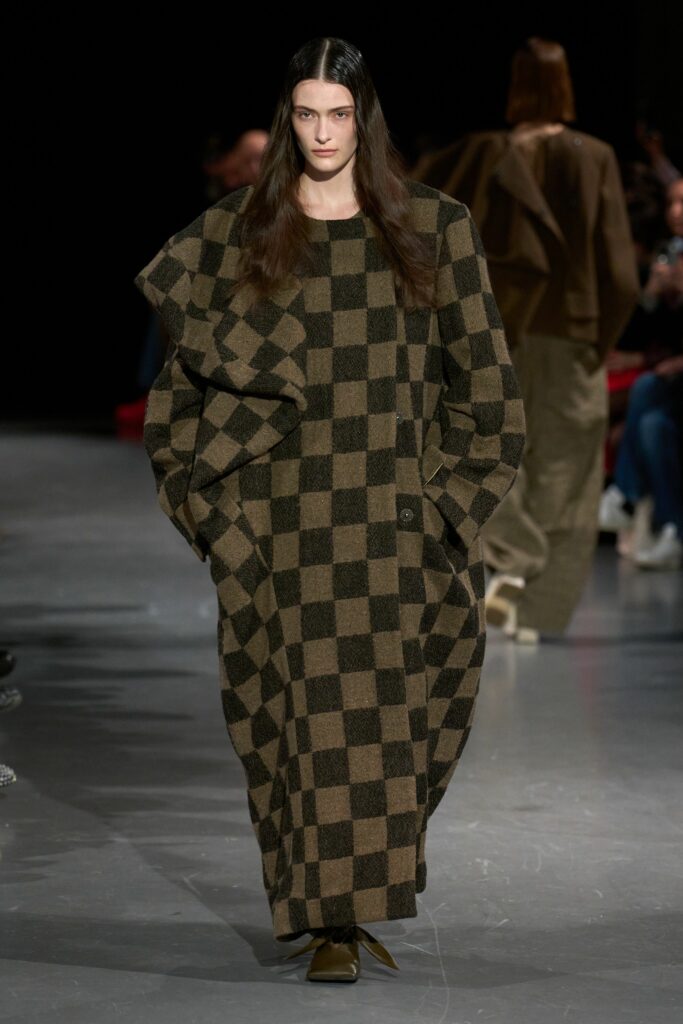
Uma Wang, FW25
Credit
Written by Phoebe Cotterell @_phoebe_alice