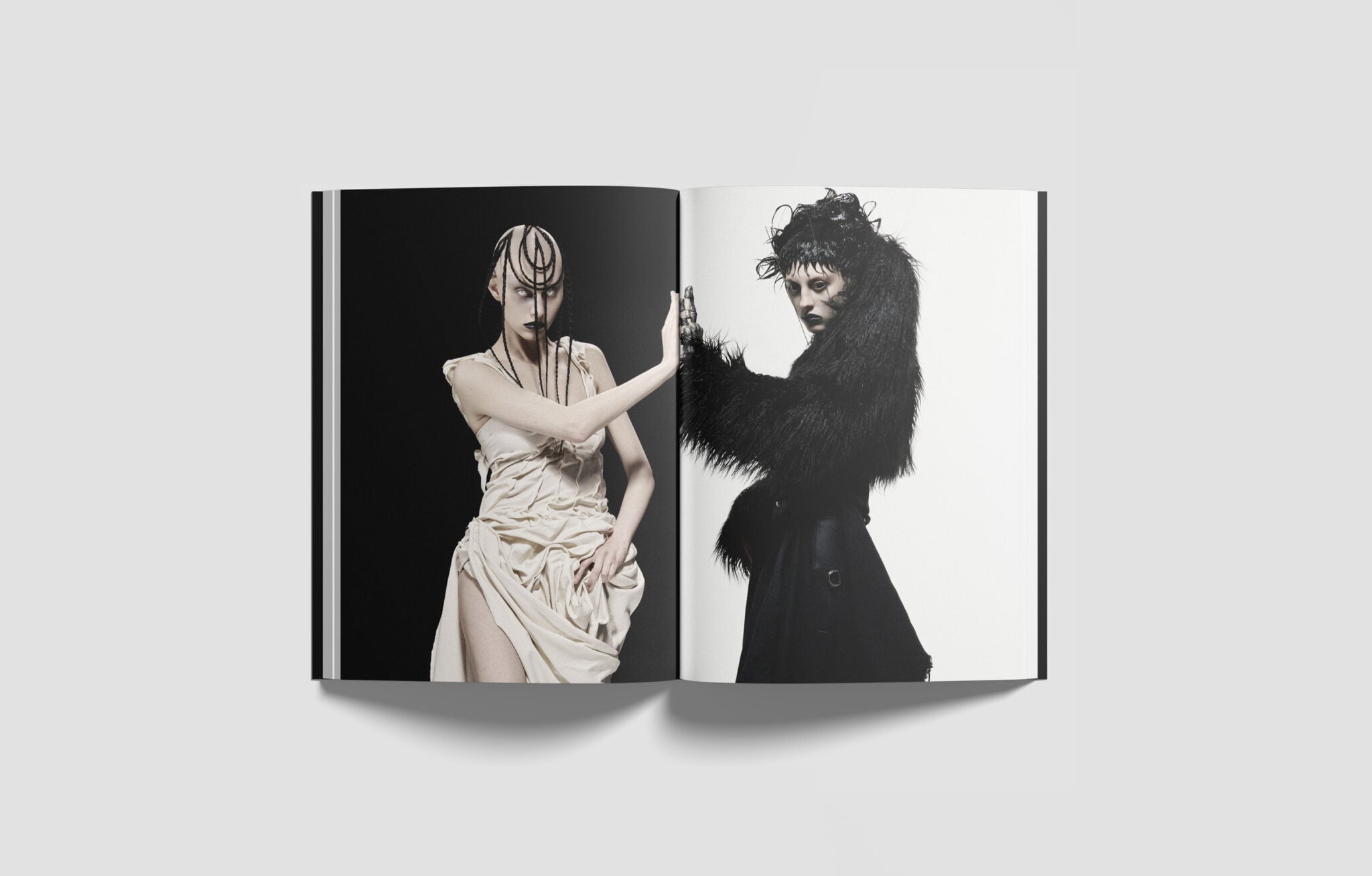
While the recent media frenzy around the Vatican might have cooled off, fashion keeps returning to Catholic imagery, and perhaps that is no coincidence.

RECOMMENDED FOR YOU :

From transforming furniture into dresses to garments embedded with motors, lasers, and microchips, Hussein Chalayan revolutionized the relationship between fashion and technology. This article explores how the British-Cypriot designer became one of the earliest pioneers of wearable tech and conceptual fashion.

Why the Fashion World is Exploring Hair… Down There

While the fashion industry has drawn inspiration from the internet for years, a new wave of digital-first aesthetics is accelerating the evolution of trends.

Want to smell like bloody birthday cake, chilly nights in London, and burnt blunt?

Anonymous fashion is quietly reshaping the industry. Inspired by the legacy of Martin Margiela and embodied by designers like Carol Christian Poell and Aleksandr Manamïs, this movement rejects celebrity culture and returns focus to craftsmanship, material, and form.

Mia Gosset continually rethinks what jewellery and objects can be. Here, she shares her process, inspirations, and the vision behind her practice, uncovering what truly makes Mia Gosset, Mia Gosset.

What happens when fashion stops trying to please and starts to think? Between decay and emptiness, between Derrida and Rei Kawakubo, conceptual fashion can become a meditation: on truth, impermanence, and the self beneath appearance.

Blending video game design, CGI, and couture craftsmanship, Victor Clavelly transforms technology into poetry. His creations stretch the limits of the body, reimagining what fashion - and reality - can become.

Centuries before punk or avant-garde existed, German mercenaries were already slashing fabric, clashing colours, and defying social codes. The Landsknechts of the 15th century turned rebellion into style, and their fearless self-expression still echoes across today’s runways.

For those stepping into the avant-garde realm of fashion, Carol Christian Poell is an essential figure. Though now retired, his legacy endures. Through radical construction, cryptic processes, and garments that confront both the body and time, his influence continues to shape the fashion world.

Isabelle Taylor is a beautifully unconventional surrealist fashion designer specialising in fish leather, a sustainable material made from the byproducts of smoked salmon, which she uses to create garments through her brand, Skinned Potential.

TOP 10 ARTICLES :

ARCHIVES :

From transforming furniture into dresses to garments embedded with motors, lasers, and microchips, Hussein Chalayan revolutionized the relationship between fashion and technology. This article explores how the British-Cypriot designer became one of the earliest pioneers of wearable tech and conceptual fashion.

Elena Dawson is not a brand. It is a state of being, a phenomenon whose aura resists all attempts at categorization within fashion’s coordinate systems. Her creative work is a secluded sanctuary, a chapel on the outskirts of the industry. Here, a particular, deeply intimate romance is born : the romance of a soft gothic, devoid of vampiric pomp and grotesquery, yet imbued with Victorian melancholy and the stoic grace of decay.

As she releases her Retrospective book, we chart the Eurythmics vocalist's looks across different musical eras, and how they shaped fashion, gender representation, and the visual vocabulary of pop.

Known for her Oscar-winning costumes in Bram Stoker’s Dracula and her visionary work across film, theater, and fashion, Ishioka blended avant-garde artistry with wearable sculpture.

In light of recent exhibitions like Demna’s retrospective at the Kering headquarters and Rick Owens’ Temple of Love, we explore the tension between fashion as something to be worn and fashion as something to be preserved and exhibited.

The body disappears, distorts, expands. Not to become something else, but to escape being human at all.

We explore Elsa Schiaparelli’s relationship with Surrealism, from collaborations with artists like Dalí to how Daniel Roseberry’s recent collections reinterpret those codes for a contemporary audience.

Rooted in the echoes of Orthodox Christianity, Russian literature, and forgotten silhouettes of the early 20th century, the brand TCHUR constructs garments as fragments of an alternate reality : somewhere between ritual, memory, and dream. Drawing from the mystical meaning of “chur” as a boundary between worlds, each piece becomes a quiet incantation: a way to reveal what culture hides, and to dress the invisible.

Dissecting fashion's relationship with distorted, dark, and deformed imagery

Welcome

E-mail
Password

E-mail *
First Name *
Last Name *
Age *
Gender *
Country *
City *
Phone Number *
Password *
Confirm Password *

E-mail
New password
Confirm new password